

Mindfulness is acclaimed as a marvel within the wellness movement where it is regarded as a fundamental tool with enormous benefits. With well-documented, science-backed evidence that it alters the brain profoundly, mindfulness can be used to bring about inner calm, reduce symptoms of stress, anxiety and depression, improve focus and even manage pain.
Mindfulness encourages one to live a life with more lightness.
Jon Kabat-Zinn
There’s plenty of evidence about the power mindfulness has to improve health and wellbeing. But in spite of this widespread knowledge of its benefits most people don’t get around to doing it.
For many this hesitancy arises simply because they are not really clear about what mindfulness actually is. Although it’s often regarded as a form of meditation, mindfulness is fundamentally more akin to the cultivation of a non-judgemental deep awareness of the environment, both within and around the individual. It teaches you not to react automatically to every thought, feeling or situation.
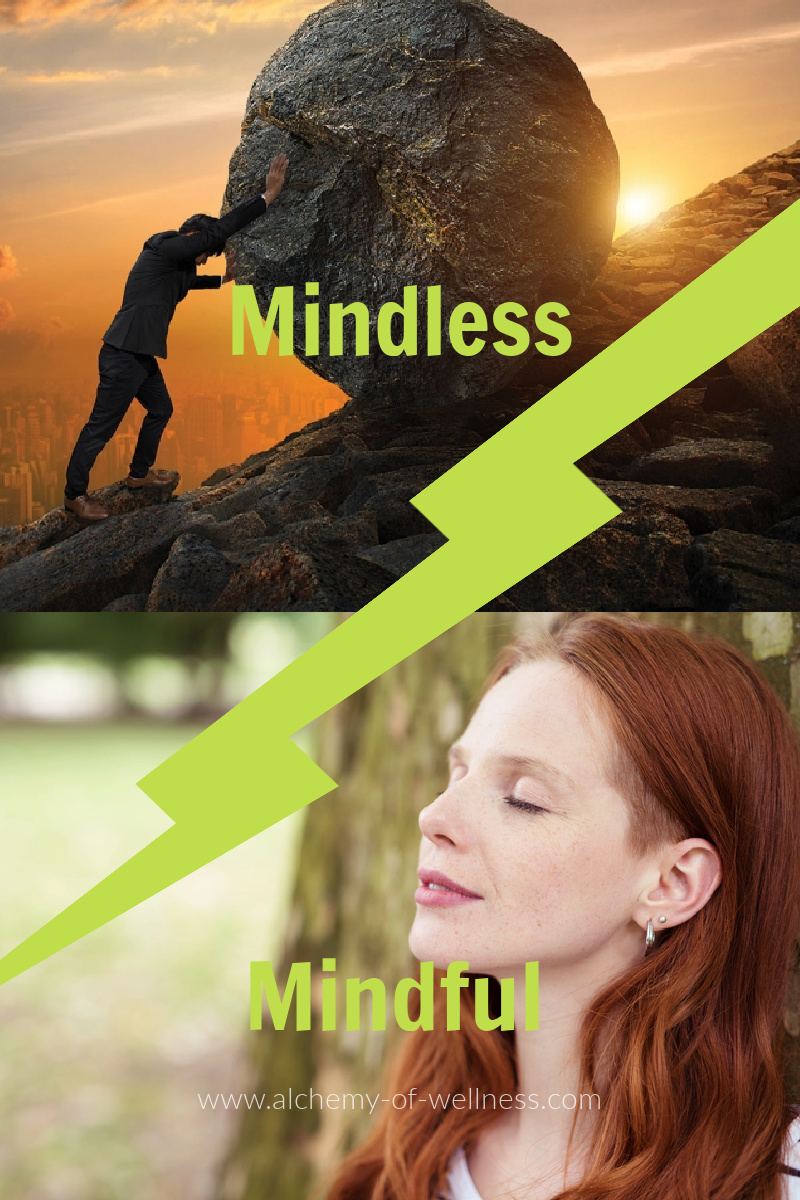
Mindlessness
When you are living mindlessly you usually don’t realise it.
That’s because you live your life on autopilot and your attention is often in multiple places at the one time. As your attention drifts you move through life unaware of what is happening around you or even within you. Thoughts, sensations and emotions pass through your consciousness without you noticing or registering them at more than a superficial level. And your short-term memory is often poor.
Because you’re unaware of your body you often ignore the clues it is giving you, until you get sick.
Living mindlessly can shorten your life and it can also seriously affect the quality of your life.
Mindlessness isn’t a flaw in your character. It’s actually a way for your brain to conserve energy and at times it can be good. But the problem comes when you drift into mindlessness at times when you need to be focused and attentive. It’s also a problem when it becomes your default position day after day.
Mindlessness can be an attempt to distance our self from relationships or experiences that are difficult.
“… when we habitually run away from what’s going on inside us and in our relationships … we end up becoming even more alienated and sad.”
Thich Nhat Hanh
Signs You’re Living Mindlessly
✦ Becoming so focused on achieving a goal that you don’t take time out to reflect whether achieving that goal will make you happy, or if you really want it.
✦ Forgetting people’s names right after being introduced to them.
✦ Being constantly preoccupied.
✦ Reading without taking in the content and having to go back and reread the page.
✦ Scrolling on your phone while only half listening to a conversation.
✦ Eating without being aware of the taste or smell of what you are eating.
✦ Driving on autopilot, so that you are not aware until you reach your destination.
✦ Using work, food, alcohol, TV as a distraction from emotions or thoughts.

Mindfulness Meditations
Mindfulness meditations don’t have a rigid format. Rather they are simple practices that draw your focused attention through your senses to what you are doing in the moment. By thinking of mindfulness in these terms any pressure associated with ‘getting the meditation right’ is removed. This makes it easier to actually begin to develop mindfulness and make it a part of your daily life.
Cultivating greater awareness allows us to quickly separate mindfulness from unconscious, habitual behaviours, or mindlessness. This helps us shift our consciousness to mindful awareness.
To start your Mindful Awareness practice, begin to recognise whenever you notice you are engaging in mindless activity. Use it to help you hold back from overreacting with automatic unhelpful responses.
Mindfulness is when you consciously focus on the present moment. It requires a deliberate choice to not allow the mind to drift aimlessly.
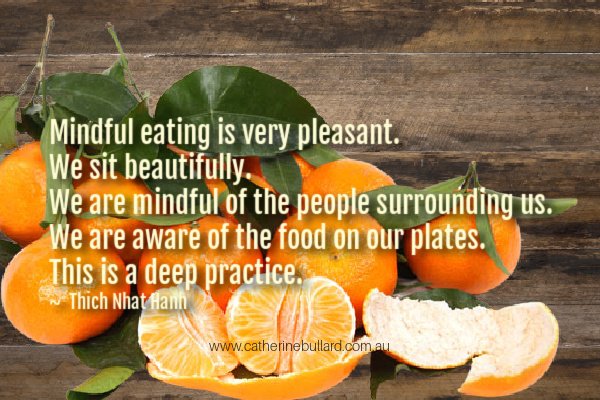
Four Simple Mindfulness Meditations
1. Savour Your Meals: Be mindful during the first three bites of your meal. Really focus on the smell, texture and taste. Chew slowly. Savour the moment.
2. Stop to observe: Take a moment each day to stop what you are doing and watch your surroundings, free of judgement. Simply observe and notice.
3. Breathe…Just Breathe: Simply sit and breathe in a quiet room for 10 minutes. Focus on the subtle movements of your body at rest – how is your body moving and how does it feel.
4. Visualise your thoughts: Empty your mind by envisioning your thoughts as objects, and through breathing focus on each one for a few seconds before pushing the thoughts further and further away.

Disclaimer
All information and opinions presented here are for information only and are not intended as a substitute for professional advice offered during a health consultation. Please consult with your health care provider before trying treatment suggested on this site.
© Catherine Bullard and Happy Holistic Health, 2026. Unauthorised use and/or duplication of this material without express and written permission from this blog’s author and/or owner is strictly prohibited. Excerpts and links may be used, provided that full and clear credit is given to Catherine Bullard and Happy Holistic Health with appropriate and specific direction to the original content

