
Think how often we ask, “How are you doing?” But maybe we’d do better asking “How are you breathing?” Many people have forgotten how to breathe deeply into their belly. However, when you reawaken this practice you activate a powerful self-healing tool to create better health.
Have you ever stopped to consider how you breathe? Have you ever watched and noticed the way you breathe? If you practice yoga the answer is likely a resounding “yes” as breathing technique is a yogic fundamental. Likewise, meditation and relaxation techniques require breath awareness and control. But how often do you stop and consciously breathe deeply during your normal day?
Consciously controlling your breathing is one of the simplest and most effective ways to diminish the effect of stress on your body and improve your health.
Constant stress leads to raised cortisol levels and is the forerunner of serious chronic disease. When you breathe deeply you reduce the negative effect of cortisol on your body. Efficient, effective and mindful breathing is a basic essential for good health and wellness.
Ninety percent of people breathe completely inefficiently.
Mindful Breathing
Ninety percent of people breathe completely inefficiently. Their breathing is unconscious and purely reflexive. So it often becomes haphazard and irregular.
Becoming mindful of your breath gives you conscious control to command how you breathe, rather than allowing it to become automatic and inadequate. When you’re not in control of your breath, when you ignore it, a primitive part of your brain is triggered to step in and take over. Breathing becomes a simple, unconscious, reflex action.
Stop for a moment to notice just how you breathe. Take a deep breath. Do you find it satisfying or a little difficult? Is it shallow? Is it fast? Do you sigh a lot? Or gasp? Do you hold your breath? Are you able to breathe deeply, down into your abdomen?
Check your breathing. Are you breathing poorly?
Try this experiment. Time yourself and count how many breaths you take in one minute. For most people it will be between sixteen and twenty which indicates they’re breathing poorly, from the thoracic upper chest. They are breathing reflexively and their breathing is under the control of the primitive part of the brain. This way of breathing is very inefficient. The air they breathe is only making it into the upper part of the lungs. This means rapid breathers are not getting the optimum amounts of oxygen that their body requires to stay healthy.
You can easily recognise when people are thoracic breathing. The upper part of their chest rises with each breath and sometimes even the shoulders rise a little or slump forward.
As newborns we automatically breathed well. When babies breathe their abdomen rises with every in-breath and subsides as they exhale. But most of us lost this innate way of breathing as we got older. As children we copied our parents and those around us who generally shallow breathed. When we get upset, sad or angry we often even hold our breath. By the time we are adults we have become disconnected from our breath, forgetting how to breathe deeply
When I was young, I was told to suck in my belly and to stand tall. But this undermines good breathing techniques and causes diaphragm muscles to tighten, which leads to restricted breathing. As an adult I had to unlearn this practice and learn to ‘stand loose and relax my belly’ so I could use my abdominal muscles and breathe properly.
Breathe Deeply to Relieve Stress
Ongoing stress and anxiety creates a pattern of shallow, rapid breathing with consequently less oxygen reaching the brain. This leads to feeling light-headed or even dizzy. It also affects thinking processes causing the person to become unfocused.
When our thinking capacity is reduced we deal with anxiety or stress poorly. We can find it very difficult to move out of a constant ‘fight or flight stress response’. Shallow breathing can hold us in a continued state of high cortisol production. Taking slow deep breaths when we’re stressed breaks this pattern and reduces the release of stress hormones. When you slow the breath down you also draw air more deeply into your lungs.
Diaphragmatic Breathing
Most people have at some time been told to slow down and breathe when they’re distressed, or sometimes more simply to “take a deep breath”.
When you slow the breath down you also breathe air more deeply into your lungs which allows more oxygen to enter the blood.
However, there is no point in expecting your lungs to do all the work to breathe. Basically, they are just empty sacs to hold air and are incapable of doing the work of breathing on their own.
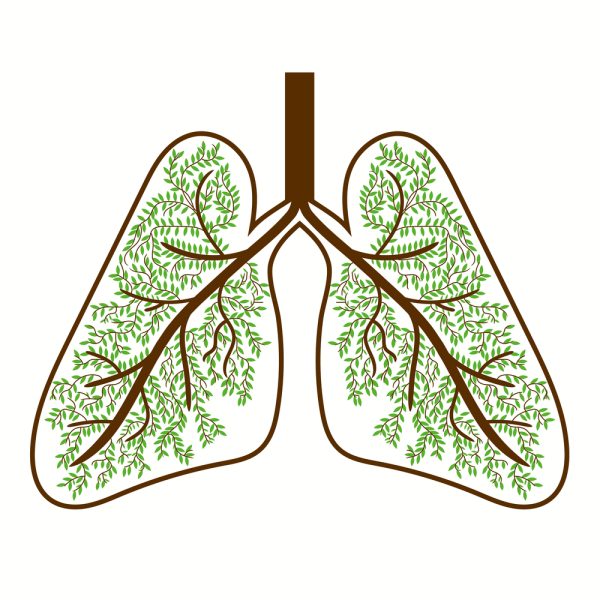
Good breathing utilises other muscles in addition to those in the chest and upper back. Across the front of your body below the ribs is a sheet of muscle called the diaphragm. It sits directly below the lungs and above the abdomen and acts like a pump for the lungs. When you squeeze in your abdomen the diaphragm moves upward and pushes the air out of your lungs. When the abdominal muscles relax the diaphragm moves back down, leaving space for the lungs to stretch out which draws air into the expanded lung space.
Healthy, beneficial breathing comes from the diaphragm.
If you put your hand on the bottom of your ribs and take a deep breath you’ll feel your hand rise and fall. That’s because the diaphragm is doing its job, rising and falling to push air out of the lungs and let air flow back in. When you are breathing deeply you should also see your abdomen rise and fall.
Benefits of Breathing Deeply
✦ Blood concentration is greater in the lower part of the lungs. Therefore, drawing air into this area creates a higher exchange of oxygen out of the air and into your blood cells.
✦ Long, deep, slow rhythmic breaths into your abdomen below the umbilicus (belly button) pulls more air and oxygen deep down into the base of your lungs.
✦ Oxygen passes into your bloodstream more efficiently and effectively.
✦ Breathing deeply helps remove more toxins from the body.
✦ It helps to prevent disease and to manifest healing if disease is already present.
Rather than reflexively breathing rapidly, slowing down your breathing to about eight or nine breaths a minute has a dynamic effect on your circulation and reduces the work of the heart. It also gently massages the heart muscle and relaxes the muscles in the chest, ribs and stomach.
How to Correctly Breathe Deeply
Shallow breathing is a developed habit, so like all habits it must first be unlearned.
Once your breathing style is re-learned practice it frequently until it becomes a normal part of life. Starting slowly helps your muscles to develop. Eventually, your body begins to obey your mind and you automatically breathe more efficiently.
Deep rhythmic breathing is simple but for it to become automatic takes conscious practice. The easiest way to begin is to lie down and place one hand in the middle of your chest and the other on the bottom edge of your rib cage. As you inhale the lower hand at the base of the ribs should rise, and as you exhale it should fall. The upper hand should barely move at all.
With practice this deep diaphragmatic breathing will become a habitual part of your life. Eventually, you’ll notice your breathing has become slower and deeper.
Make Deep Breathing a Habit
Become aware of all the times you’re taking shallow breaths, holding your breath, raising your shoulders, or when your chest rises and falls. These often indicate the onset of a state of stress. Notice also when this breathing coincides with particular states of mind. It may be an early warning that your fight or flight response has switched on, triggering a flood of stress hormones into your system.
Simply committing to doing the practice through the day sets up the pattern. Set the intent to do some deep breathing every hour, or whenever you do a particular action. It can be as simple as standing up from your desk. Choose any marker in your day to establish the practice. After a few months, you’ll find that deep breathing has become a habit and you breathe deeply with ease.
I try to consciously breathe slowly and deeply when I’m driving. It ingrains a new habit that helps maintain the practice. An extra benefit is that it reduces the inevitable stress caused by driving in heavy traffic.
It’s essential for almost all of us to re-learn how to breathe correctly
You don’t have to lie down to practice this. You can do it when standing, sitting, or lying on your back with your arms by your side. Breathe out quietly through your nose or mouth and then breathe in through your nose. Minimise the pause between breaths to ensure the air is filtered and moistened. Gradually lengthen the time of each breath.
Practising rhythmic deep breathing ten times a day for a few months will bring you deep rest and relaxation and reduce your stress. You’ll become calmer and less nervous. All the functions of your body will reflect the benefits. You become healthier, happier and more energised.
Remember it’s essential for almost all of us to re-learn how to breathe. Stop and breathe deeply as often as you can throughout your day to change this damaging habit.

Disclaimer.
All information and opinions presented here are for information purposes only and are not intended as a substitute for professional advice offered during a consultation. Please consult with your health care provider before following any of the treatment suggested on this site, particularly if you have an ongoing health issue.
© Catherine Bullard and Happy Holistic Health, 2013. Unauthorised use and/or duplication of this material without express and written permission from this blog’s author and owner is strictly prohibited. Excerpts and links may be used, provided that full and clear credit is given to Catherine Bullard and Happy Holistic Health with appropriate and specific direction to the original content
Source articles
http://www.theartofbreathing.com/articles2.htm
Smith Jones, Susan, Health Bliss: 50 Revitalizing NatureFoods and Lifestyle Choices to Promote Vibrant Health, Kindle ed, 2008
Related articles
- Deep Breathing (lymph4life.wordpress.com)
- Breathe, Just Breathe (openingspacesdotcom.wordpress.com)
- Self Care Tip ~ Breathe (happysuburbanchick.wordpress.com)
 Happy Holistic Health