

“You will never speak to anyone more than you speak to yourself inside your head. Be kind to yourself.”
Talking to our self in a kind nurturing way may be a real challenge if nurturing words were rare during our childhood. The way others around us interacted with us in our formative years set the tone for the way we interact with ourselves in later life. If it was more common we were criticised or neglected as a wee one, then it’s more likely we will be critical of ourselves as an adult.
This pattern of behaviour can be unconsciously passed down through families for generation after generation. Each generation reinforces the pattern of self-loathing and neglect so it can be difficult to change. But the cycle can be broken when we learn to accept ourselves and change our self-talk from critical to becoming loving and Self-Nurturing.
At some time almost every person has spoken to them self with words that are far from self-nurturing. Almost every person has criticised their own actions, capabilities, appearance, intelligence, competence, achievements and so many other perceived failings at least once.
Loving-Kindness Exercise
Destructive (NON-Self Nurturing) Thoughts
Identify five NON-self nurturing thoughts you’ve had about yourself.
These thoughts may look like this:
✦ Nobody in my life truly loves me
✦ I’m never going to lose this weight, so what’s the use in trying
✦ I’m not smart enough
✦ Nothing in my life ever goes right
✦ I always pick the wrong partner and I’ll always be alone
✦ Nobody ever notices me. I get passed over all the time
✦ I am ugly
✦ I’m a terrible person
✦ I am a failure
✦ I always say something stupid
✦ I’m disorganised which always makes me late
✦ I never receive the support I need
✦ What’s the point? I already know it won’t work out.
✦ Many, many, more!
Add your own negative self-talk to the list.
How do you feel as you read through these thoughts that do NOT support and nurture you? Maybe you feel sad, angry, ashamed or hopeless.
How did you respond? Perhaps you reached out for comfort foods. Or you curled up, pulling back into your seat. Or maybe you tried to distract yourself by busying yourself with lots of activity.
These are all normal responses, and there are many others. We all try to find a way to deal with criticism as best we can. The response we adopt may have been influenced by how we saw others deal with their feelings during our early life.

How deeply do you believe these thoughts about yourself?
Take a moment to go deeper and feel how you believe them rather than just thinking about your beliefs. As you read through them notice where you feel this response in your body and notice what that sensation is. It may show up as a feeling, a pain, a colour, a thought, memory, emotion or many other ways. Really explore it until you can recognise it easily.
Self-Nurturing Thoughts
Now identify five self-nurturing thoughts you have about yourself.
These thoughts may look like this:
✦ I am smart and resourceful
✦ I always give my best and others appreciate how hard I try
✦ I’m dependable and others trust me
✦ I allow myself to play and have fun
✦ I care for myself
✦ I believe in myself and feel confident about my future
✦ My health is important to me
✦ I trust myself to make the best decisions for my future
✦ I allow myself to grow
✦ I am safe and loved
✦ My life is guided by love
✦ I feel empathy for others
✦ I sort out problems when I encounter them
✦ I love and accept myself as I am right now
How do you feel after reading through these self-nurturing words? Do you feel strong, confident, happy, calm, empowered?
Did you initially respond with denial or feelings of inadequacy? If so go back and notice exactly which words caused this response and what the response was in your body. Get very exact about identifying and naming how it appeared.
Identifying these feelings of denial or inadequacy helps you to begin the process of change, integration and growth.
How deeply do you believe these words?
Loving-Kindness Self-Love Challenge
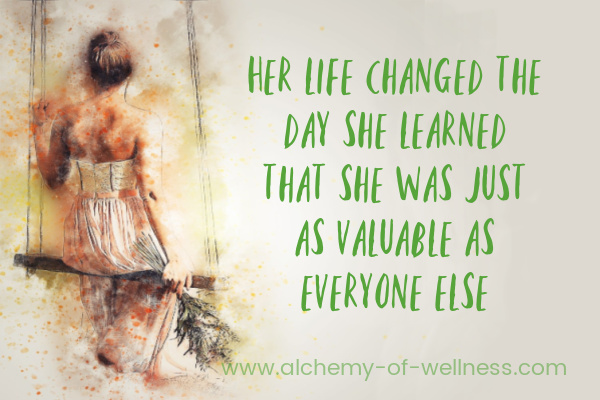
Our goal in this challenge is to change the way we speak to ourselves by only using words that support, nurture and empower us.
Take five NON-self-nurturing thoughts about yourself you’ve identified and turn them into nurturing thoughts. For example, “I never receive the support I need” might become “I recognise when I need help and support and I speak out and ask others for their assistance.”
This self-nurturing thought forms the basis of an affirmation to use throughout the day of reinforce your new way of speaking to yourself.
Introducing these practices into your daily life will start the process to stop self-sabotage. They will cement changes you want to introduce to speak to yourself with more love and compassion.
Choose one self-nurturing thought to begin and practice it for the next three weeks. Use it as an affirmation through the day to remind yourself. Whenever you find yourself slipping back into old self-destructive thoughts draw on the nurturing thought to show yourself self-love and to shift the ingrained way of thinking.
You can then go ahead and add another for the following three weeks. Gradually you’ll integrate a collection of self-loving thoughts to replace old, destructive thoughts to change your self-image. In this way you’ll gradually re-frame the context of your relationship with yourself to one of kindness and acceptance.
Be Your Own Best Friend
What would it be like to be your own best friend?
What does this look like?
Begin to love and enjoy hanging out with yourself with loving-kindness days. Choose a day or even just a night if your time is limited, and simply slow down. Don’t schedule anything. Instead, just open yourself to whatever turns up in your awareness. You may decide to read a book, write, spend time in nature, eat exactly what you’re craving, go somewhere you’ve been curious about for some time. Whatever you do savour it, eat up every moment.
After a day like this where you refill your cup, you’ll feel rejuvenated.
Love All of Yourself
In this exercise you speak to yourself with Loving-Kindness. This means saying phrases to yourself such as “I love and totally accept myself exactly as I am”. Be generous with yourself as you love and accept both your strengths and your weaknesses, the parts of yourself you view as beautiful and those that are not so attractive.
Forgive yourself. Forgive all your poor choices, all the dumb actions and mistakes you’ve made. Accept that they came from the knowledge you had at that time, which was limited. Know that as you grow within, you come to understand yourself, others and the world around you in greater consciousness and so can make different choices. Bestow compassion upon yourself for all you have done in the past, and acknowledge this as a catalyst for initiating real change now and in the future.
Take Actions Guided by Self-Love
Repeat positive Loving-Kindness affirmations to yourself such as the phrase: “I deserve kindness and love” or any of the others above. Support and reinforce these affirmations with positive actions, such as giving yourself free time if you need it, practicing patience with yourself, accepting that you will still make mistakes and not aiming for ‘perfection’.

Surround Yourself with Loving People
When you treat yourself with more love you may come to realise that you deserve more from others than you’ve received in the past.
If you arrive at this place, it is time to reassess your boundaries. Ask yourself whether you need to set and maintain new boundaries with others. You may find there are relationships that far from nurturing and supporting you, actually undermine you. It is time for you to let these go. Seek out dependable friends who accept you, who are loving and supportive, and who appreciate all your qualities as an integral part of what makes you, YOU.
This nourishes you and helps you create and maintain better self-care practices.
A Loving-Kindness Activity To Do With A Partner
Do this activity with someone you have a strong supportive relationship with; someone who has your best interests as heart.
Person 1 asks: “What do you affirm about yourself?”
Person 2 answers with one positive thing.
Person1 nods but doesn’t comment. Then asks again: “What do you affirm about yourself?”
Person 2 again answers with one positive thing.
This exchange continues until Person 2 draws a blank. They then reverse roles so Person 2 asks the question and Person 1 answers.
The Loving Kindness Meditation
The Loving Kindness Meditation is a particularly lovely meditation arising from the Buddhist tradition, that brings you gentle healing. It also sends healing through loving kindness to those around you and to all living things on the planet. If you feel yourself falter in your new self-love and nurturing practice, use this simple meditation until you feel grounded. It will increase your capacity for self-acceptance, forgiveness, and connection with others.
Find full instructions and a guided meditation here.
Disclaimer
All information and opinions presented here are for information only and are not intended as a substitute for professional advice offered during a consultation. Please consult with your health care provider before trying treatment suggested on this site.
© Catherine Bullard and Happy Holistic Health, 2012. Unauthorised use and/or duplication of this material without express and written permission from this blog’s author and/or owner is strictly prohibited. Excerpts and links may be used, provided that full and clear credit is given to Catherine Bullard and Happy Holistic Health with appropriate and specific direction to the original content

