Category Archives: Conscious Mindset & Stress

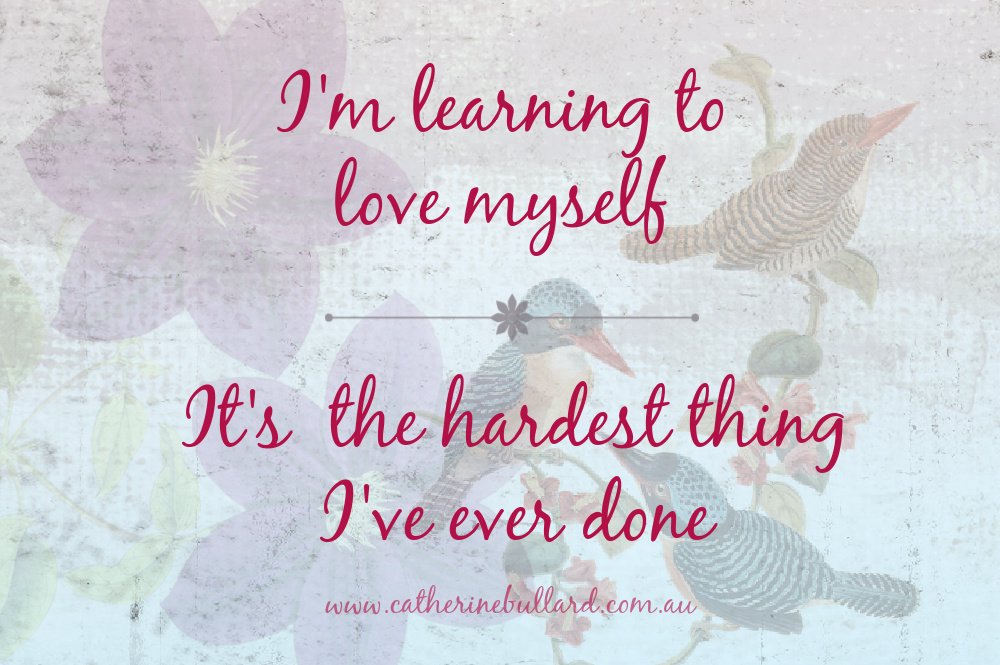
Learn To Love Yourself Unconditionally

“When I loved myself enough, I began leaving everything that wasn’t healthy. This meant people, jobs, my own beliefs and habits – anything that kept me small. My judgement called it disloyal. Now I see it as self-loving.”   
~ Kim McMillen

Most of us are so busy waiting for someone to love us that we’ve forgotten about the one person we need to love first—ourselves. While we’re caught up looking for love from a partner we miss out on receiving love from the one person who has the most amazing love to give. That is the person who stares back at us from the mirror. However, you can learn to love yourself unconditionally.

Falling in love with yourself does not have to be loaded with guilt. It’s not selfish when we do it with appreciation. And best of all we discover a source of love that never runs out.

It’s often said that we “can’t expect others to love us if we don’t love ourselves first”. While this is true to an extent it’s not the whole picture. Because the reality is, others DO love us even when we don’t love our self. They see the beauty within us even when we can’t.

When we don’t show our self genuine love we can very quickly find we’re caught in a cycle of negativity. Lack of self-confidence, insecurity, jealousy and self-loathing feed off each other and escalate our unhappiness. If we continue in this pattern we begin to push others away. This perpetuates our belief that we are not worthy of love, and reinforces our self-dislike.

Conversely, when we love our self and treat our self with kindness and respect, we always have someone around who sends us love. We feel more confident, positive, and secure. We draw others to us and we receive even more love from them also.

How To Love Yourself

So how do you start falling in love with yourself? The whole idea of turning this concept into a process may seem a bit ridiculous. However, it’s not really so silly.  Engaging in a process of introspection and appreciation makes the process very possible.

When you fall in love with someone else the romance follows a few steps. You can follow these same steps to fall in love with yourself.

Your First Meeting

Your quest for love begins when you meet an interesting person.

Similarly, the first step to loving yourself is to meet YOU. Close your eyes and take a few deep belly-breaths. When you feel relaxed turn your attention within.

Without any judgement consider what you are really like? What do you like to do, to eat, to play, your interests, and your passions? What are your accomplishments? What is good about you? Don’t be critical. Recognise what’s interesting and unique about you.

If you are struggling to find positive qualities within think about the qualities you admire in others. These qualities, talents or gifts you admire are a reflection of qualities that are also present within you. We admire them in others but often we cannot recognise them in ourselves.

Getting To Know Yourself

After meeting somebody new you get to know them.

If you don’t know the answer to some of these questions about yourself watch yourself carefully over the next week. Bring your awareness on board to explore what’s great about you. Look within to discover what your desires and dreams, your strengths, weaknesses and fears are.

Once you get to know these aspects better you can begin to appreciate the little things.

Your task is not to seek for Love, but merely to seek and find all the barriers within yourself that you have built against it.
~ Rumi

Loving Your Shadow

Often we are loathe to accept our self entirely. We reject certain things about our self that we deem unacceptable or bad and often hide these characteristics and behaviour from others.

But we can never love our self if we only accept the “nicer” parts of us. Self-love is the result of recognising, accepting and integrating every part of us, the light and the shadow.

A big problem with repressing parts of our self is that dark aspects can sabotage us. When they are not integrated within our wholeness they are very limiting.

Anger, frustration, jealousy, selfishness, bossiness, manipulation, bitchiness, and greed are all aspects we’re taught we must overcome. But they are all as much a part of us as generosity, selflessness and loyalty. And over your lifetime your shadow aspects have ALL played an important role in your self-care and protection. Every shadow aspect that resonates with you or that you strongly reject has contributed to building your strength today.

Inner Shadow Aspects

When we recognise, acknowledge and integrate a ‘selfish shadow’ it supports us to practise self-care. It allows us to ask for what we want as well as to not give more than we can.

An ‘inner bitch’ shadow provides the strength to step forward from a place of personal power to create healthy boundaries. It allows you to ask for what you want, need and deserve without feeling manipulative or mean.

Once you integrate ‘inner victims’ within your whole you become more empathetic and appreciative of others who suffer. Once it is fully integrated you easily shift to being able to better help and heal others.

The ‘inner greedy person’ causes you to give more and more value or support, never feeling you’ve provided enough. But when integrated it amplifies your ability to give to others as well as to receive. It tells you when you really need to ask for more, and reminds you it’s ok that your needs are also met.

Very often we don’t recognise the good and the benefit that our shadow characteristics bring. We overlook that they help make us a complete person. When we acknowledge and integrate them they support us to build happiness and fulfillment in our life.

Know Yourself Completely

Take some time to get to know your whole self.

Find a quiet space. Turn off the phone and close the door. Close your eyes and take a few deep relaxing breaths. Then call out your inner shadow, whichever it may be. Ask it how it has made you stronger.  Ask it what it needs from you in order to be healed, heard, appreciated and valued. You may be surprised at the answer. But trust that this is your deep inner knowledge and wisdom directing you.

Ask what you need to do right now to move forward. If the answer is vague like “love yourself more” ask for specifics such as “how would it look if I were more loving to myself”?

It can be scary to start integrating your shadow aspects. But if you allow them to move forward they will guide you and support you to greater self-care and self-love. While you repress shadow aspects they suck your power and control you with judgement and criticism. Once you integrate them the resistance they once created disappears and they become your allies.

It becomes far easier to love yourself when you’re not beating yourself up for not being “perfectly good”. Such a thing does not, and cannot exist. There can be no light without dark, no day without night, no good without bad. And there can be no self-love without acceptance of our WHOLE self, both the light and the shadow.

Once you begin to trust and appreciate ALL of you within, you’ll come to appreciate that person is worth every gram of your love.

Dig Deeper

While becoming aware of ALL of you, the light and the shadow, is a great way to start loving yourself it is only the beginning. You need to do a little more to love yourself completely.

Once you get to know the awesome person within and appreciate all their wonderful characteristics it’s time to build trust. This person won’t abandon you or hurt you. They will always be there for you. Building trust can take time, but if you begin to trust a little you’ll see it’s warranted, and you can then trust a bit more.

Give yourself love, just as much as you would to someone else – a lover, child, parent or sibling or even a BF. You have great love to give and you are worthy of your love.

Perform loving acts such as hugging yourself to remind yourself of your love. Every day remember to tell yourself that you love YOU and remind yourself how strong and beautiful you are.

These steps can take a little time but are very important.

Ask yourself:

  • “What is the first thing I need to do right now to move forward?” and
  • “How can I shower myself with all my love today? Can you identify three different ways to achieve this?

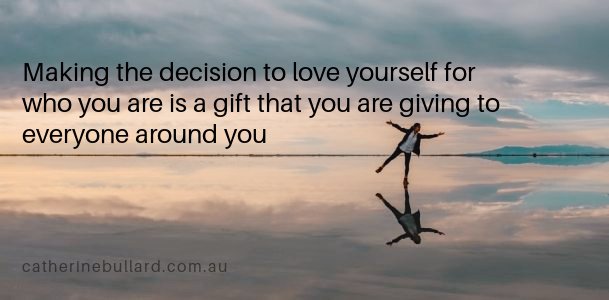
Making the decision to love yourself for who you are is a gift that you are also giving to everyone around you.

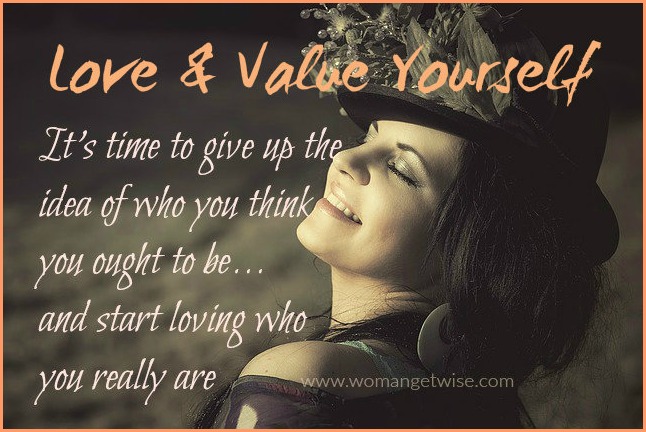
love and value yourself

Disclaimer

All information and opinions presented here are for information only and are not intended as a substitute for professional advice offered during a consultation. Please consult with your health care provider before trying treatment suggested on this site.

© Catherine Bullard and Happy Holistic Health, 2012. Unauthorised use and/or duplication of this material without express and written permission from this blog’s author and/or owner is strictly prohibited. Excerpts and links may be used, provided that full and clear credit is given to Catherine Bullard and Happy Holistic Health with appropriate and specific direction to the original content.

30 Daily Love Gifts To Yourself

Are you showering yourself with Self-care?

Do you regularly show yourself love, compassion and kindness?

Do you notice when you need to stop, take a break, even just a minute, to nurture, ground and replenish yourself? Or are you quick to berate and run yourself down?

Do you forget to nurture and care for yourself because life is too busy?

Do you show yourself the same compassion and kindness you show to others?

Too often we avoid our own needs. We invest in caring for others and forget, or don’t allow ourselves, to care for ourselves.

So how do you show yourself love, compassion and kindness when you don’t know how?

Daily Love Potions – A Gift to Yourself

When we are stuck in a pattern where we neglect to love and care for ourselves it’s easy to forget how to reverse that. 

In order to change our habits and show ourselves the love we deserve, we have to change both what we think and what we believe about ourselves. 

Daily Love Potions can help you not only change what you do for yourself, but also give insight and understanding about why you’re holding yourself back.

And the beauty is that everyone around you will also benefit. As you show yourself greater love, compassion and kindness you’ll also have more to give to others. What greater gift can you give to yourself and those you love and care for?

The Daily Love Potions Worksheet

So how do you start this process? What more could you do for yourself?  Most of us rarely allow ourselves to answer this question honestly and completely.

The Daily Love Potions Worksheet is a potent tool to help you become more supportive, nurturing and loving towards yourself – every day!

DOWNLOAD 

your Daily Love Potions Worksheet 

How To Use The Daily Love Potions Worksheet

Create a list of ideas about how you can show yourself self-love, kindness, nurturing and compassion. Go wild with ideas. Include things you’ve longed for but never allowed yourself.

Then take the worksheet and fill in each of the shapes with a self-love idea from your list.

There are no rules about how big or small this act can be. The only important thing is that you do it for you!

Once you’ve filled the shapes you can begin to gift the Love Potions to yourself.

Here’s how:

✦  Every day for 30 days perform one of the Love Potions for yourself. If some other new idea has shown up it’s fine to do that instead.

✦  You don’t have to do them in any order.

✦  You can repeat them, although try to do as many different Love Potions as possible.

✦  Once you’ve completed the Love Potion for each day write down what it was on your worksheet.

✦  Get yourself a beautiful journal to record your progress and responses to introducing the Daily Love Potions into your life.

Here are a few examples:

❤    Write a kind note to yourself on a sticky note

❤    Intervene before you put yourself down and stop it

❤    Take time for a cup of tea

❤    Watch a movie

❤    Go for a walk

❤    Listen to music while clearing the dishes

❤    Add some colour

❤    Paint

❤    Buy something that makes you feel good

❤    Treat yourself to a special meal

❤    Take a salt bath with essential oils

❤    Buy a new book

❤    Play with your dog or cat

❤    Bring some flowers into the house

❤    Say no to something you don’t want to do or go

❤   Take the day off

If You Get Stuck…

“I Made My List But Can’t Get Started”

If you started out full of good intentions but hit a roadblock before Day 1 – DON’T DESPAIR!

Sometimes when we decide to begin something new, fear rises up to stop us moving forward.

Don’t worry! This is just subconscious thoughts and patterns appearing. When things are about to change our subconscious can panic because it believes all change is scary and things are safer if they stay the same, even when they’re not good at all!

You just need to provide some reassurance to yourself that change can be good.

But to do that you need clarity about exactly what’s creating the block.

Asking yourself these questions can help:

Read through your Love Potion ideas. Pause at each one. Journal your response to these questions. Record both thoughts and feelings.

✦  As you finish reading through your list what is it you are feeling? Try to distill this into one word. Which of the Love Potions matches this feeling the most?

✦  Which Love Potion excites you?

✦  What on your list feels as though it could be a real challenge?

✦  What do you know about your list of Love Potions?

✦  What do you think will happen after 30 days? What do you hope will change?

✦  What is the thing that you wanted to put on your list but didn’t?

✦  What would you do if you were brave?

✦  When do you want to begin?

✦  Do you need to change anything before you start?

✦  What is your first step?

“I Began The ‘30 Days’ But Didn’t Finish”

If you started the 30 days of Love Potions but dropped off the wagon, don’t berate yourself.

Review each of your Daily Love Potions. Are they still the best ways you can show yourself love, compassion and kindness?

If the answer is NO, or they just don’t quite sit right, change them.

Your Expectations

These questions will help you get clear about your expectations about Daily Love Potions and also what may be holding you back from starting or continuing.  Answer the questions and then begin the 30 Day Challenge again with deeper insight into your needs and challenges.

✦  What is stopping you from committing to yourself?

✦  Is there anything in your life that provides a reason or excuse not to continue?

✦  How would you feel if you didn’t do anything on this list?

✦  Is there something on your list you find particularly challenging? Remember, the greatest challenge often holds the greatest reward.

✦  Review your list of Love Potions. Pause at each item. Are these still the best ways to show yourself love? Are there any that no longer sit comfortably with you? If the answer is ‘yes’, or they just don’t quite sit right, change them.

✦  What did you feel as you read through your list? Try to distill this feeling into a single word. This feeling may reflect an old belief that’s holding you back.

✦  What have you noticed so far as you do your Daily Love Potions?

✦  Do you need to change anything?

✦  When can you start again?

✦  What do you hope to get from this process? What do you think will happen?

You can never give yourself too much self-love and kindness

Integrate The Daily Love Potion Process

Congratulations! You’ve finished a whole month of treating yourself with kindness, compassion and love.

Sometimes after we do a process like this all the great practices we started, begin to slip away, until we fall back into our old critical or un-nurturing ways.

Once you finish the 30 days it’s time to make self-love, compassion and kindness natural and normal, everyday.

The key to making this a natural part of your life is to review and integrate what you discovered about yourself, and how it benefited you, instead of leaving it hanging.

Consider your response to each of these questions carefully and then record your answers in your journal.

✦  How was it filling out your Daily Love Potion ideas?

✦  Did you have problems finding enough Love Potions? How could you have refined your choices?

✦  Were there any you found particularly challenging?

✦  What do you feel as you look at your list of Daily Love Potions?

✦  Are there certain things on your list that make you feel inspired? What are they?

✦  What is alive in you right now?

✦  How are you doing at showing yourself some love each day?

✦  How do you feel when you choose to do something for yourself each day?

✦  What are the common themes you’re seeing?

✦  If you had a magic wand what would you do to show yourself some love?

✦  If you weren’t worried or concerned about anyone else, what would be one of your Love Potions?

✦  Is there anyone you would like to share your worksheet with? What would be your intention for that conversation?

✦  On your list of ideas what has the most energy for you?

✦  What item on your list is the scariest for you to think of doing?

✦  What practice on your list would bring you the most joy?

✦  What did you notice in yourself as you moved further through your list?

✦  Did you notice any change in the people around you as you moved further through the process?

✦  What changed for you over the 30 days?

✦  Which of these Love Potions can you introduce into your routine every single day?

✦  What have you learned about yourself through the 30 days?

Choose the Daily Potions from your list that you can easily do every day and that also lift your energy, your mood and your self-appreciation. Continue doing these until it seems like your day is incomplete if you forget them.

Disclaimer

All information and opinions presented here are for information only and are not intended as a substitute for professional advice offered during a consultation. Please consult with your health care provider before trying treatment suggested on this site.

© Catherine Bullard and Happy Holistic Health, 2012. Unauthorised use and/or duplication of this material without express and written permission from this blog’s author and/or owner is strictly prohibited. Excerpts and links may be used, provided that full and clear credit is given to Catherine Bullard and Happy Holistic Health with appropriate and specific direction to the original content

Access Your Personal GPS to Activate Your Intuition

Intuition is a type of intelligence that you always had,

even before you knew anything else at all. 

Right from the very beginning it quietly speaks

to you in small whispers that guide you towards

what’s best for your growth and happiness.

It can be difficult at times to consciously make choices that are aligned with your highest good. In challenging times confusion and indecision reign so you waver when facing complex alternatives. At times you may feel tempted to say, “I’ll just let the Universe guide me about which direction I should take, or what I should do next”. But this way of thinking gives away your personal power. It can leave you drifting aimlessly through your life experience.

It’s up to you to choose your life trajectory, it’s not enough to expect that somehow the Universe will guide you. You have to CHOOSE to take control of your life. But if that’s to be truly effective and create more than just the ‘Law Of Average’ for you, you need to learn to recognise your intuition and then to work with it effectively. Intuitive directed intelligence is a powerful support to help you make important decisions about your life direction and rise above the Law of Average.

Intuitive directed intelligence is a powerful tool to help you make important decisions about your life direction and to rise above the Law of Average.

Your Personal GPS

Imagine your intuition is a personal GPS system which works in a similar fashion to the GPS in your car.  If you have installed it correctly, you know how to use it properly.  Once you’ve switched it on you can rely on it to get you from where you are now to where you want to be, from point A to point B, in the most direct fashion.  You can expect that it will keep you clear of any traffic jams or roadblocks and take you by the fastest, most direct route to where you’re going.  And at the same time, it will give you good fuel economy and be efficient.

Intuition is just like a GPS for your life.  When you have all the components in place to make it function properly and know how to use it effectively, you can rely on it to guide you through life and get you to where you want to be in the best way possible.

The quality of the direction and support you get from your intuition is entirely dependent on how well you set up your intuitive GPS and how well you interact with its intuitive prompts. 

This relies on three important tools, Peace, Precision and Perception.

  • Peace is about creating a static-free environment where you can immediately recognise your intuition whenever it shows up.
  • Precision relates to giving your intuitive GPS precise directions.
  • Perception refers to the way you interpret the messages you receive.

ACTIVATE YOUR INTUITION

STEP ONE:

Go to your heart to generate coherence

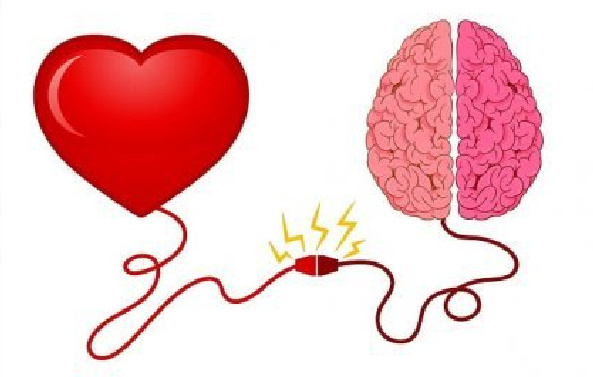
Research by the HeartMath Foundation recently revealed that the intelligence carried within your heart out-powers that of the brain by 10 to 1. Because the heart is the first organ formed in the body, many more lines of information are developed from the heart TO the brain than there are from the brain to the heart. Much more information travels from the heart than from the brain.

Whenever we become stressed, our heart begins to race from fear, anxiety or overwhelm which means that our access to the problem-solving capabilities of our intuition is completely cut off.

Our brain has two types of power. The left brain deals with analytic and logical thoughts, and the right brain with creative thoughts. When we bring together our heart intelligence and our brain intelligence, we create a powerful middle ground of agile creativity which opens channels to our higher wisdom to solve problems and download new ideas.

Intuition thrives when all levels of our mind, that is, our brain, our heart and our gut, come together to function as a whole.

Action

Calm your mind with a meditative practice.

Create a vessel of peace and coherence to hold your intuitive process.

STEP TWO:

Peace. Clear out the static of stress

Stress is the number one obstacle that prevents you unleashing the power of intuition. Stress is like having static on your GPS. Whenever you’re too busy, have a deadline to meet, have too much to do, or are feeling overwhelmed in any way, you cannot access the creative power of higher wisdom.

When you are feeling stressed you become less efficient and less effective. You simply cannot bring up creative and innovative ideas and solutions when you’re stuck in your head, analysing and worrying over a problem or looking to others for advice. It’s impossible.

In order to break the patterns of stressful thought you need to remove yourself from your mind and its thought patterns, because your mind itself is the source of the stressful thoughts. You must relax your mind and clear out the static in order to allow intuition to speak instead. As Albert Einstein said, “You cannot solve a problem on the same level of thinking that created it. ” You need to shift your mind on to a new level in order to access intuitive wisdom and creative problem solving.

Action

Create more Peace.

Take a break, get outdoors and breathe.

STEP THREE:

Precision. The power of asking

Probably the most important step in this process is that of carefully creating a properly worded question. Just as with your car GPS, if you’re not really clear and exact about where you want to go, you’ll end up in the wrong place. You need to be really precise about both your starting point and your destination. Using simple language, ask exact and precise questions of your intuition. This is where most people slip-up in the beginning of this process. They don’t get clear solutions because they ask vague or ineffective questions.

Just as for a GPS, your strong starting point relies on a strong direction request. Questions need to be worded in the present moment, positively oriented and results based in order to get a more potent intuitive result.

Action

Get super clear about what you DO want and what your ultimate vision or goal actually is, rather than focusing on what you are afraid of or trying to avoid.

Make your questions precise.

STEP FOUR:

Forget what you know in order to expand your Perception

People who believe they know everything have great difficulty accessing intuition. Intuitive solutions emerge from the non-linear and non-rational part of the mind. They don’t often follow traditional ways of thinking. So unless you’re open to alternative ways to solve a problem you will limit how intuition can communicate with you.

When you know little or nothing about something you are not limited by what you DO know. Your mind is open to all possibilities. When you give yourself permission to forget what you’ve been taught your mind becomes open and accessible to all possibilities. This is why beginners luck can be so potent.

Action

Be willing to see, learn, and experience new things, however they may show up

STEP FIVE:

Perception – Pay Attention

Intuition speaks the language of the Creative Mind. It uses the language of symbols, and images, music, or art, and it draws on our senses to guide us.

Once you have formed a precise question to ask for direction from your intuition. This is the time to Pay Attention.

Call in the power of awareness and notice what you begin to notice through your day, and also in your dreams at night.

Anything that captures your attention, a song on the radio, a comment from a friend, a graffiti image, or a line in a movie could all hold the perfect answer. This is your intuitive GPS whispering to you. It’s up to you to notice and take action

Action

Watch more, speak less

STEP SIX:

Have fun, play, and take inspired action

Intuition thrives in an environment of peace, ease and grace. It speaks much more clearly in a mind that is not overwhelmed with stress or burdened with the need for perfection. It provides direction through a flexible and agile system that is open to any and every possibility.

Intuition is that voice that speaks to athletes when they’re in the zone, or artists, writers and musicians when they’re in the flow. It’s even that cautionary voice that warns us to be careful on a dark street. It is the detached whisper of inspiration, and it holds no emotion. It is calm and solid.

If you can recapture that feeling where life is a joy even when it’s challenging, and make this your starting point, intuition can begin to speak to you as clearly as any solid real-life coach.

Action

Lighten up! Laugh! Take inspired action

Disclaimer

All information and opinions presented here are for information only and are not intended as a substitute for professional advice offered during a consultation. Please consult with your health care provider before trying any of the treatment suggested on this site. 

© Catherine Bullard and Happy Holistic Health, 2012. Unauthorised use and/or duplication of this material without express and written permission from this blog’s author and/or owner is strictly prohibited. Excerpts and links may be used, provided that full and clear credit is given to Catherine Bullard and Happy Holistic Health with appropriate and specific direction to the original content

Self-Care For Soul Empowered Wellness

As Autumn winds down it’s time to treat yourself with compassion.  Be conscious this is the season to be gentle and wrap yourself with TLC.  If you are someone who is constantly there for everyone else, now is the time to turn that caring inwards and say ‘no’ to others.  It is only by first caring for your own needs that you can adequately care for those around you.

Self-care is a vital step on the pathway to Wellness. Although we may know that self-care is important it can be difficult to know how to begin to make the necessary changes. The answer is to begin with something simple and work up to the bigger challenges.

Self Love

Self-care begins with self-love which is an essential step on the pathway to Soul Empowered Wellness.

If you wish to grow in consciousness and walk a path of integrity and authentic power, one of the most fundamental steps is to attend to your self-care.  It all begins with self-love, the simple act of honouring yourself with kindness and respect.

Self-love has nothing to do with being selfish. Rather, it is about attending to your needs, not about putting yourself before others. It requires you to tune into your body, your emotions, your mind and your soul and attend to what it is you really need and desire.

Silence Your Inner Critic

In order to care for ourselves we must first recognise and banish the inner critic. This is the voice in your head that always casts doubt on your inspiration, your actions or even just you. That inner ‘judge’, ‘mean girl’, ‘critic’, ‘saboteur’ or whatever you call it, (I call mine ‘The Committee’) serves us at certain times in our life.  But at others it undermines our dreams and can keep us locked down in limiting thoughts.

There are times in our life we really need that inner voice.  It is the voice of caution that pops up to keep us safe.  But it is also the voice that keeps us small, limited, and unfulfilled.

In the interests of self-care and empowerment it is when that inner judge is most vocal that you need to reclaim the control to direct your own life.  When you don’t claim control, your inner voice will keep you restricted by replaying your old stories and belief systems that don’t support your personal growth.

The second part of the process is to attend to your needs.  A lot of people think this is about pampering but it is much more.  While pampering can be a part of self-care it’s not the crux.  At its centre self-care is about tuning in to your body, emotions, mind and spirit and addressing what it is you need on all these levels.

Guide To Self-Care

It can be hard to know how to begin the process of self-care.  Here are a few suggestions.

1. Shut Down Your Inner Mean Voice

I began the process of self-care by dealing with the critical voice of my ‘Inner Committee’.  The very first step was to notice it whenever it showed up and nip-it-the-bud to stop it dead.  I spoke directly to it with strong language at first.  I reminded it that I was the boss on our life journey; that it was welcome to come along for the ride, but I was in charge. I was surprised because it didn’t take long to shut it down fast and stop the limiting criticism.  This was incredibly liberating.

Start by noticing when your Inner Critic speaks up and takes over and immediately silence it with a simple ‘no’, ‘stop’ or ‘enough’. Don’t be afraid to use stronger language if it’s needed.

2. Accept The Whole You

Accepting who you are in your entirety can be challenging but is vital to you becoming whole.  This means loving yourself exactly as you are, flaws and all.  It means accepting your negative thoughts and the aspects of yourself that you’d rather others never knew existed.  And it’s about recognising that the aspects of yourself you may consider negative are often the very ones that are related to caring for your deepest needs.

Many people have been sabotaged by certain new age ideas that teach we must always be positive and vibrate high.  But natural laws dictate that nothing can exist in such polarity.  Everything must be balanced by its opposite, hot with cold, light with dark, masculine with feminine, spirit with matter.

And so it is with all things in the natural world, including our own personal light and shadow. We can’t always be positive. When we try to always vibrate high, we become unbalanced and unwell. Often your shadow aspects are the very things that protect you and address your needs.

It’s not about trying to change yourself to become better, but about acknowledging, accepting and integrating all parts of yourself. This is how you become whole.

3. Acknowledge Your Individuality

You are YOU!

Comparing yourself with others – your family, friends, celebrities, anyone – keeps you small.  It’s easy to fall into the trap of comparing yourself and your life with others. Scrolling social media can leave you feeling worthless when you play the comparison game.

Every person has their own journey in life. Each is unique. Every journey and every life story is special, individual and valuable. When you forget this and begin to compare yourself to others you immediately sabotage your self care. You don’t need to compare yourself to anyone.  Own your individuality and unique qualities.

4. Own Your Space

Very simply, you are worthy. You deserve to be here and you deserve your share of the amazing abundance of this universe.  You deserve to take up and own your space in this world and to enjoy the gifts the world offers.  It is not your role to belittle yourself, to hold yourself back or to deny yourself.

Remind yourself you don’t need permission to claim what your heart desires because this is your right.  Claiming it shows yourself love and respect and encourages others to also show you love and respect.

5. Perfect Ain’t Possible

Sometimes we forget that perfection is an unattainable goal. We push and push ourselves, never taking credit for our personal qualities and achievements.  When we can only accept perfection within, we are constantly in judgement of ourselves.  And we unwittingly invite the inner critic to take control once again and criticise what we do, and who we are.

“When perfectionism is driving us, shame is riding shotgun and fear is that annoying backseat driver.”

  ~  Brene Brown

Self-care is a crucial factor in your quest for Empowered Wellness.  As long as you continue to make yourself less than you are, and less than you deserve, you can never find the harmony and balance of Wholeness, in body, emotions, mind and spirit.

I’d love to hear about your own Self-Care Journey to Wholeness in the comments section below.

Disclaimer
All information and opinions presented here are for information purposes only and are not intended as a substitute for professional advice offered during a consultation with your health care provider.  Do not use this article to diagnose a health condition.  Speak to your doctor if you think your condition may be serious or before discontinuing any prescribed medication.  Please consult with your health care provider before following any of the treatment suggested on this site, particularly if you have an ongoing health issue.

© Catherine Bullard and Happy Holistic Health, 2026. Unauthorized use and/or duplication of this material without express and written permission from this blog’s author and/or owner is strictly prohibited. Excerpts and links may be used, provided that full and clear credit is given to Catherine Bullard and Happy Holistic Health with appropriate and specific direction to the original content

Anxiety May Look Like…

Anxiety is not just being worried
It’s not just about being afraid.

Anxiety may look like all these:

Our world has changed so much over recent years and we’ve changed along with it.

We’ve become so used to living with pressure, stress and anxiety that we now take it for granted.  We believe that being on the edge of overwhelm is fine because it is completely normal, just as long as we don’t fall over the edge into burnout.

Sometimes, because it has become our normal, we don’t recognise that we’re living with constant anxiety because we forget that anxiety doesn’t always look like worry or fear.

Mindfulness is a simple, powerful and drug-free way to reduce anxiety

Being mindful relieves stress and anxiety because your awareness is in the present moment. You are not focused on what went wrong in the past or worrying about the possibilities of the future. Nor can you drift into the other avoidance behaviours of anxiety because your attention is focused. Your stress hormones are under control.

Discover techniques to reduce anxiety and more with mindfulness. 

Disclaimer

All information and opinions presented here are for information purposes only and are not intended as a substitute for professional advice offered during a consultation. Please consult with your health care provider before following any of the treatment suggested on this site, particularly if you have an ongoing health issue. 

© Catherine Bullard and Happy Holistic Health, 2012. Unauthorised use and/or duplication of this material without express and written permission from this blog’s author and/or owner is strictly prohibited. Excerpts and links may be used, provided that full and clear credit is given to Catherine Bullard and Happy Holistic Health with appropriate and specific direction to the original content

Be In the Moment for More Life Value

Mindfulness is about fully and openly embracing the present moment.  Sounds so simple, right?  But in truth we spend our time doing everything but that.  And that goes doubly when we encounter a challenging emotion that makes us uncomfortable or even fearful.

When we face a situation that triggers a challenging emotion, we quickly fall into our default position for challenges. We move into the story we have built up around this situation or emotion over time. This story is embedded in our subconscious and carries a specific limiting mindset.

We get pulled us straight back into the past and all the times we have experienced that emotion before. We remember the situations in detail, the wrongs that were done to us or how we failed or were judged by others.  We end up getting lost in the emotional drama of our ‘story’ and our connection to the present is quickly and completely lost.

But the past is gone.  Those thoughts and beliefs that arise are nothing more than stories, they’re not real. 

In many cases these thoughts and beliefs are not even of our own making. They have been passed to us from someone else and usually don’t even reflect our own true values. They can even come from the earliest time in our life before we were cognisant of what they even meant.

Unfortunately, the stories we re-run over and over, and the emotional ‘rabbit-hole’ they lead us down, hold such a power over us that it can be really difficult to break free of them.  

Luckily the key to breaking them apart and changing that mindset is a simple technique using awareness.  Mindful awareness is an active investigation into the nature of your mind and how it functions.

Perceiving True Mind

Trying to discover the true nature of our mind is impossible using the mind itself.  We can never clearly understand this by using our thoughts. This is because most of the stories in there are hidden in the subconscious or distorted in faulty memory. 

But fortunately, we don’t have to rely only on our mind because our thoughts, experiences, memories and emotions are also held within every cell of our body.   And our body cells are a far more reliable and accessible library of all these than is our mind.

We can use a simple awareness exercise to keenly observe and witness the messages held by our body with clarity. This helps us to unlock them without getting drawn into the story or the drama that has always surrounded them.

This simple exercise will guide you to unlocking the secrets of your cells.   Doing this exercise allows you to stay in the present moment even when your emotions begin to overwhelm you. It becomes an excellent tool to draw on whenever life threatens to overwhelm you.

When you first do this exercise, you may find yourself slipping back into the emotion.  Whenever you notice this happening gently guide your awareness back to the exercise, without any judgment.  Don’t beat yourself up, it’s completely normal for our thoughts to stray and for emotions to take over. Just notice them, focus and then bring them back.

Each time you do the exercise you’ll find your ability to maintain your detached focus, to identify what you observe and to accept the associated emotion become easier and easier. Each time it will cause you less stress.

Mindfulness Exercise: Connect Your Mind, Body and Emotions

Observe:  When you feel an emotion that’s unpleasant the first step is to take a few slow, deep breaths and quickly scan your body from head to toe.  Look for the strongest sensation – the one that bothers you the most. Focus your attention on that sensation.  Use your awareness.  Observe it carefully, curiously.  Notice where it starts and where it ends. Discover as much about it as you can.

Distance:  Don’t judge what you find.  Don’t try to work out what it’s about.  All you need to do is observe.

Breathe:  Take a few deep breaths.  Breathe into and around the sensation.

Expand:  Make room for the feeling.  Loosen up around it and create space.

Allow: Allow the emotion to be there.  You don’t have to like it or want it.  Simply let it be and make peace with it. The goal is not to get rid of it but to give up the struggle with it.

This mindfulness technique can be applied to as many different sensations as you want.  As you do the exercise one of two things will happen: either your feelings will change – or they won’t.  It doesn’t matter either way.  This exercise is not about changing your feelings.  It’s about observing them and accepting them whilst staying in the moment.

This exercise helps you stay out of the drama, whether it’s around you or within. When you step outside the emotion like this and simply observe it with awareness, you strengthen your engagement with your Highest Self, with Source. This keeps you grounded and in the present moment.

Pay Attention With Mindfulness

Create Calm Through Conscious Awareness

Mindfulness is the art of being present and 
accepting the moment, as it is.

Mindfulness is the energy of being both aware and awake to the present moment. It is the ongoing practice of engaging fully in every moment of daily life and accepting it without judgement. It is about simply Being instead of constantly Doing.

Recently I was reading about mindfulness while I was eating a slice of toast.  As I continued to read, I suddenly became very conscious of the irony of my situation.  Engrossed in the internet, with thoughts of what I needed to do during the day running around in the background, I was eating in a way totally lacking in mindfulness.

So I stopped reading and focused on the delicious food.  I immersed myself in experiencing the bread toasted so that just the outside was crunchy and the centre still moist; the tang of the sourdough culture; the seeds coating the crust; the sweetness of warm butter which had soaked through into the heart.

I noticed the autumn sun pouring in through the window and the small birds hopping along the branches outside. 

At one point I began thinking about writing this post about mindfulness, but being mindful, I put the thought aside and focused on eating the toast again. Truly, I tasted and enjoyed that piece of toast far more deeply than many I have eaten. It was all the more delicious because I was focused in the moment.

“When we are mindful, deeply in touch with the
present moment, our understanding of what
is going on deepens, and we begin to be
filled with acceptance, joy, peace and love.”

Thich Nhat Hanh

My distraction while I was eating is completely normal. Human consciousness focuses on a lively dance between revisiting past events and anticipating the future. But developing mindfulness in our daily routine can have a very positive impact on our lives as well as our health.

Conscious Awareness

Mindfulness is a hot topic right now, but it’s nothing new. It involves the art of consciously living in the present moment without getting drawn into the drama.

At its simplest mindfulness can be likened to awareness with intent.  It’s about using awareness to observe and notice in an open and curious way. 

Mindfulness and intentional awareness are both about paying attention with purpose. They are like being in the eye-of-the-storm and still being able to consciously hold the place of stillness, while all around is chaos. They allow you to live in the here and now, noticing with clarity the reality behind what’s appears to be going on, while remaining emotionally detached.

Mindfulness Changes Your Brain

This mindfulness practice of touching life deeply in every moment of daily life brings heightened awareness and inner calm.

When we practice mindfulness, we become more open to noticing what is happening in our lives, with greater clarity. Everyday problems do not disappear. But because we are fully present in our lives through the practice, we become able to respond to life’s pressures in a much calmer way. 

Developing and strengthening your awareness with mindfulness can transform your brain by changing or creating new circuits particularly those involved in stress, attention and focus, memory and mood. Mindfulness changes the way neurons in your brain communicate with each other. This opens the opportunity for you to interact and respond to your experiences and the world around you in a whole new way.

Mindfulness also helps us avoid self-judgement and self-criticism as we become more accepting of both our strengths and our challenges. This brings significant health benefits to our body, our mind and our soul.

Embracing the energy of mindfulness and allowing it to flow into our lives to penetrate everything we do provides us with the opportunity to foster the development of grace within. 

It deepens our capacity to live more meaningful, balanced and peaceful lives.

Origins of Mindfulness

The ancient practice of mindfulness has come to us through many eastern philosophies including Buddhism, Yoga, Tai Chi and Taoism. It’s now embraced by the West and widely taught in a non-sectarian way because it is a proven effective tool to treat many psychological clinical disorders.

Thich Nhat Hanh, a Vietnamese Buddhist monk, teacher, author, poet and peace activist, taught the art of mindfulness throughout his lifetime. Initially he taught it through the practice of mindful breathing and later through Walking Meditation. Walking Meditation is more than just strolling around. It’s about being peacefully rooted in the present and always aware of both your mind and body as you move.

Walking meditation provides additional benefits to those gained through mindfulness, such as improved blood sugar levels1 and blood flow and better balance and ankle coordination.

Benefits of Mindfulness

Mindfulness has been proven to effectively counteract stress by intentionally focusing the attention on the present moment and at the same time, accepting it without judgement.   Focusing on the present moment prevents you becoming caught up in worry about the future or regret or shame about the past.

The Benefits
  • Improves clarity, focus and concentration
  • Stimulates creativity 
  • Helps develop a stable mind to stay grounded, rather than one that is dull or agitated
  • Reduces anxiety by cultivating a flexible mind able to reduce the impact of stressful thoughts and feelings
  • Increases self-awareness of your mind and its thought patterns
  • Helps you become less reactive in difficult and challenging situations
  • Replaces self-defeating behaviours with more beneficial ones

Mindful Practice

We are so familiar with projecting our attention and thoughts into either the future or the past, that it can take time to become proficient in maintaining your awareness in the present moment. But it can be developed through repetition until it becomes natural and automatic.

Whenever you think of it, practice by focusing on your breath, your surroundings or on each of your five senses – sound, sight, smell, touch and taste in turn. Tune into your thoughts or your body and just observe what you notice without any judgement or self-recrimination. Hold this state as long as you find comfortable and notice how much calmer it leaves you feeling.

Mindfulness leads to a keener awareness of all aspects
of your life and the world around you

Every time you can bring your mind into the NOW, even just momentarily, you help cultivate a mindfulness practice that will eventually become a permanent and automatic part of how you function.

Commit to cultivating mindfulness in your life today, to gain profound and sustained benefits.

  1. Effects of Buddhist walking meditation on glycemic control and vascular function in patients with type 2 diabetes https://doi.org/10.1016/j.ctim.2016.03.009
Disclaimer

    All information and opinions presented here are for information only and are not intended as a substitute for professional advice offered during a consultation. Please consult with your health care provider before trying any of the treatment suggested on this site. 

    © Catherine Bullard and Happy Holistic Health, 2026. Unauthorised use and/or duplication of this material without express and written permission from this blog’s author and/or owner is strictly prohibited. Excerpts and links may be used, provided that full and clear credit is given to Catherine Bullard and Happy Holistic Health with appropriate and specific direction to the original content.
    Is Your Life In Balance? Take The Quiz

    Does trying to maintain balance in your life make you feel like a tightrope walker? Well, know you’re not alone!  Most of us have so many constant demands on our time and energy life can feel like a three-ring circus.

    Balance has become just one more thing we long for in our lives but believe we can only deserve and have once we’ve earned it, through overwork or overwhelm.

    Whether it’s in work-life, caregiving vs. self-care, daily routines, creative pursuits or a host of other areas, creating balance across our life can feel more and more out of reach and elusive with every passing day. Many people feel life just isn’t delivering all it promised. They can feel let down, unhappy and in some cases, even bitter.

    But you can find balance right now.

    Once you make the decision that you’re worth it, you can commit to making the changes you need to help you find balance in both your beliefs and practices. By changing, even in small ways you can once again find joy and balance.

    True or False?

    Do you have that balance right? How far away from the happy point are you?

    Take this quiz to see how well you are meeting your responsibilities while at the same time recognising and fulfilling your personal needs and wants.

    How well do these statements match you? Are they true for you or false?

    1. The only way I can successfully manage my life is to take care of myself physically and emotionally.

    2. Nurturing myself increases my capacity to help others.

    3. I eat healthfully.

    4. I exercise regularly.

    5. I get check-ups, go to the dentist, and take preventative precautions to prevent illness.

    6. I regularly set aside personal, quiet time for myself, whether I’m meditating or simply letting my thoughts drift.

    7. I experience the gifts of each season: walking in the rain, cosy fires, bundled-up beach walks; gardening, hiking, more time outside, smelling the roses; camping, swimming, barbeques, walking barefoot on the earth; harvesting the bounty, gathering wood, spending more time inside, walking in the mist.

    8. Creativity nurtures me. I do what I love, whether that’s cooking, drawing, knitting, writing, dancing, building, singing or any other creative pursuit.

    9. Cleaning out the old makes way for the new. I recognise when things and attitudes no longer serve me and regularly declutter the old and outdated in my life for a lightness and clarity.

    10. Reaching out to others enriches my life. I spend quality time with family and friends.

    11. Contributing to the world provides connection and purpose, so I give my time, energy and experience where it is most useful.

    12. I notice and heed the emotional signals that tell me I’m out of balance: irritability, overwhelm, resentment.

    13. If I feel that I’m catching a cold, I realise I may have stressed my immune system with overdoing things, so I stop and take care of myself.

    14. When I need or want to, I say “No” to requests for my time.

    15. I acknowledge my successes, no matter how small. I give myself permission to feel proud of all my achievements.

    16. I listen to and honour the requests my body makes for such things as a nap, a walk, green vegetables, hot soup, time out.

    17. I practise gratitude to build inner strength and resilience to help me bounce back from stress. I remind myself every day of just how fortunate I am and of all the bounty and wonderful people in my life.

    18. If I have something planned for myself, I don’t just toss that aside when someone makes a request of me.

    19. I’m busy, but I find time to do the things I want to do.

    20. I’m happy. I regularly experience well-being, contentment, even joy.

    How Did You Score?

    If you answered false to more than ten questions, that is more than you answered true, you need to make changes in your life to support you and prevent burn-out.

    After all, burn-out often leads to serious health problems ranging from aches and pains, through adrenal fatigue to depression plus many, many more.

    Even the smallest child knows the frustration of having no time for activities that make you feel alive, that fire your joy and passion and that nurture you, so you feel needed and special. Don’t wait until sickness strikes to change your life practices for the better.

    Next Steps

    Take a close look at all the questions to which you answered false. Is there a pattern?

    Is it just one area of your life that’s having an impact on your wellbeing and sense of balance?  Or is it spread right across all areas of your life?

    Do you have strong boundaries?

    What is the message you take away from this exercise? 

    Consider or meditate on how you can introduce changes into your life.  What practices would help you incorporate the message into your life?

    Don’t try and change everything at once. That’s a fast-track to overwhelm. Start small with one thing and once you’re getting comfortable with that add another change. Build on your achievements. And please, don’t hesitate to contact a professional if you feel you need to explore this issue further.

    So go ahead…consider yourself!

    Disclaimer

    The Information contained on this site is for your general health information. It is not intended to be used as medical advice and should not be used to diagnose, treat, cure or prevent any medical condition, nor should it be used for therapeutic purposes. The information is not a substitute for independent professional advice and should not be used as an alternative to professional health care. If you have a particular medical problem, please consult a healthcare professional.

    To Make Time, Take Time

    I’ve got something that might blow your mind. You know how we always feel like we’re running out of time? Like we have too much on our plate and not enough hours in the day? Like we’re constantly chasing deadlines, appointments, goals, and dreams, but never really enjoying the journey?

    Well, what if I told you that time is not a fixed thing, but a flexible one? That you can actually change your relationship with time and make it work for you, not against you? That you can slow down, breathe, and savour every moment of your life, without feeling guilty or stressed?

    Sounds too good to be true, right?

    But it’s not. It’s possible.

    And I’m going to show you how.

    First of all, let me ask you this: If time were an animal, what kind would it be? A cheetah? A shark? A hummingbird? A snail?

    Well, for most of us, it would probably be on the endangered species list. Or that’s how it seems with too much to do, too many places to be, too little time to do it. We feel like we’re imprisoned by our perception of time as a scarce and limited resource. We rush from one commitment to another, believe we don’t have a minute to spare, yearn for more time, and feel anxious and guilty when we’re idle.

    Is this how life is supposed to be?

    No! Nor does it have to be.

    What Is Time?

    The truth is, time is not something that happens to us. It’s something that we create. It’s a mental construct that we can shape and mould according to our needs and desires.

    But until we change our relationship with time our lives will continue to speed away from us – at enormous cost to our health and our experience of ourselves and the world around us.

    There’s no issue, no aspect of human life, that exceeds this in importance. As Jacob Needleman once said, “The destruction of time is literally the destruction of life”.

    So how do we change our relationship with time? How do we make it our friend rather than our enemy? How do we reclaim our power over it and use it wisely and joyfully?

    Well, there are many ways to do that, but here are some of the most effective ones I’ve found:

    Pause

    This is a simple but powerful technique that can help you break the cycle of hurry and stress. It’s inspired by the Buddhist monk Thich Nhat Hanh who suggested we “take a deep breath before answering the phone”.

    The idea is to create conscious pauses throughout the day – a moment of silence before a meal, a few minutes of sitting in the car before entering the house after work – in order to “come home” to ourselves.

    Conscious pauses help us reconnect with our body, our breath, our feelings, and our intentions. They remind us slow down and appreciate the present moment. They help us to remember what matters most.

    “Nature requires us not only to be able to work well, but also to idle well”

    ~ Aristotle

    Carve Out Idle Time Alone

    This might sound counterintuitive, but sometimes the best way to get more done is to do less. Or better yet, to do nothing at all.
    Aristotle said that “nature requires us not only to be able to work well, but also to idle well.” Just because we’re not doing anything doesn’t mean that nothing’s getting done!

    On the contrary, it means that we’re giving ourselves the space and time to relax, recharge, reflect and create. We’re letting go of the external demands and expectations and listening to our inner voice. We give ourselves the space to explore our thoughts, feelings, dreams, and passions. This creates room for us to tap into our intuition and creativity. It opens the way to discover new possibilities and opportunities.

    Live Fully in the Present Moment

    One of the main reasons we feel like we don’t have enough time is because we’re not really here. We’re either dwelling on the past or worrying about the future. We’re missing out on the beauty and richness of the now, the only time that we actually have. The only time that matters. The only time that we can influence and enjoy.

    So why not make the most of the present moment? Leave behind the thoughts of what was or what will be and focus on what is. Experience time more peacefully and joyfully by being fully present and aware of ourselves and our surroundings.

    Toss Out Your Schedule Wherever You Can

    Don’t get me wrong, having a schedule can be useful and helpful. It helps us organise our time and prioritise our tasks. It can also keep us focused to stay on track and achieve our goals.

    But sometimes, having a schedule can also be limiting and stressful. It can make us feel like we’re trapped in a rigid routine that doesn’t allow for any spontaneity or flexibility. We can even end up feeling like we’re slaves to the clock rather than masters of our own time.

    So why not try something different once in a while? Schedule some spontaneous time and surprise yourself. Follow your impulses and instincts rather than your plans and agendas. Take a risk and see what happens when you let go of control and embrace uncertainty.

    Explore the Underlying Reasons for Your Busyness

    Sometimes, we’re busy because we have to be. Often, we have responsibilities and obligations that we can’t ignore or avoid. Or we need to dedicate our time to goals and dreams that we are committed to achieving. But sometimes, we’re simply busy because we want to be, because we’re afraid of what would happen if we weren’t. We fill up our time because we’re avoiding emotions that we don’t want to face or questions that we don’t want to answer.

    Consider what you are running from. Identify what are you hiding from. Perhaps there is something you are afraid of. What dreams and desires have you put to the side because there’s no room or time in your life? Become clear about what you really want, and what you need for your soul’s wellness. These are some of the questions that you need to consider if you want to understand and change your relationship with time.

    Doing this emotional work might be challenging, but it’s essential if you want to stop running from your heart and start living from your soul.

    Play

    Remember when you were a kid and you used to play for hours without any worries or cares. Take your mind back and recall how the outside world disappeared as you were totally absorbed in the play. Can you recall how time seemed to stand still or fly by depending on how much fun you were having? Remember how you felt alive, free, and happy.

    Well, guess what, you can still feel that way. You can still play, and you should. Because play is not just for children, it’s for everyone. Play is not only a natural and vital part of life, it’s also a way of expressing ourselves, exploring our potential, connecting with others, and enjoying ourselves.

    Playing is a way of stepping outside time and entering a state of flow, where we’re fully immersed and engaged in what we’re doing.

    So go ahead and play. Sing, dance, draw, write, cook, garden, paint, knit, build, invent, experiment, joke, laugh, smile, hug, kiss, cuddle, wrestle, tickle, shake your bootie – whatever makes you happy. Play helps us get outside time and inside ourselves.

    Create Time Retreats

    Sometimes, the best way to change our relationship with time is to change our environment and our routine. We all need to occasionally step out of our normal life and into a different one.

    When we create a time retreat, we can shift into a different rhythm and experience time in a new way. This doesn’t have to be expensive or complicated. It can be as simple as taking a day off from work and doing something that you love or something that you’ve never done before. Or it can be as elaborate as going on a vacation or a pilgrimage to a place that inspires you or challenges you. The point is to create some space and time for yourself where you can just “be” without the need to do anything or be anyone else.

    Spend Time in Nature

    One of the easiest and most effective ways to change our relationship with time is to spend more time in nature. Nature has its own pace and a rhythm that is unhurried and harmonious. it doesn’t rush or worry or stress. Nature just is.

    When we’re immersed in nature, we can also learn to be unhurried and harmonious, aligned with nature’s rhythms, as we shift into our own calm, unhurried pace. We begin to slow down and sync up with the natural cycles of day and night, sun and moon, seasons and tides. As we come into alignment with nature, we begin to appreciate the beauty and wonder of the world around us. As we watch a bird, or a flower, or a cloud or a star time stretches out in our minds and hearts.

    Time is Your Ally

    These are just some ways that we can change our relationship with time and make it more meaningful and fulfilling. There are many more that you can discover and try for yourself. The important thing is to start somewhere and see what works for you. Watch your time reservoir refill as you allow yourself time to “breathe” in your life.

    Remember:

    Time is not your enemy. It’s your ally; it’s your gift; it’s your life.

    Don’t waste it; don’t rush it; don’t regret it.

    Cherish it. Enjoy it. Celebrate it.

    DISCLAIMER

    All information and opinions presented on this site are for information purposes only and are not intended as a substitute for professional advice. Do not use this article to diagnose a health condition. Speak to your doctor if you think your condition may be serious or before discontinuing any prescribed medication. Please consult with your healthcare provider before following any of the treatment suggested anywhere on this site, particularly if you have an ongoing health issue.

    © Catherine Bullard and Happy Holistic Health, 2024. Unauthorised use and/or duplication of this material without express and written permission from this blog’s author and/or owner is strictly prohibited. Excerpts and links may be used, provided that full and clear credit is given to Catherine Bullard and Happy Holistic Health with appropriate and specific direction to the original content

    Grounding: Easy Biohack to Upgrade Wellness

    Grounding is a term used to describe reconnecting with the present moment. It embraces many simple techniques that reduce stress to leave you feeling stable and calm. These include deep breathing, focusing on your senses, counting, better sleep practices, being in nature and even eating nuts and certain types of chocolate. These and other techniques all help reduce anxiety and the effects of stress and overwhelm. Find more about that type of grounding here.  

    But today I’m talking about the specific form of grounding that is also known as earthing. This is a practice where you connect physically with the Earth to anchor and balance your physical, mental and spiritual energy. It’s sometimes simply called barefoot walking.

    Many of us practice grounding without even thinking about it. You can probably recall a time when you were immersed in nature, feeling relaxed and refreshed. Remember how that feeling of rejuvenation persisted even when you were back in your busy life. This is due to the physiological effects of grounding.

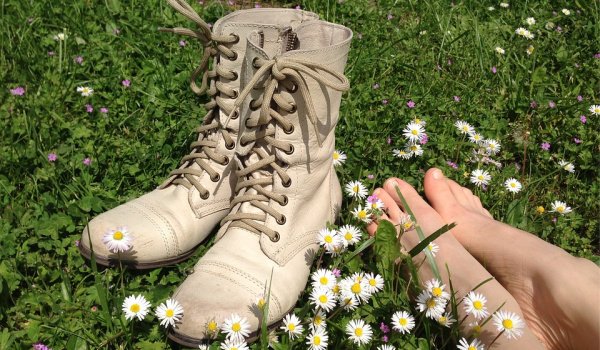
    These beautiful warm, still days of Autumn are perfect to get your shoes off and do some grounding. When you connect with the Earth through the bare skin on the soles of your feet you also connect with the free electrons that flow through the earth’s surface. This is excellent when it comes to improving your wellness because these electrons help rebalance you physically, mentally and even spiritually. Not only do they leave you feeling calmer, but they also have an impact on health issues.

    By improving physiological processes grounding helps reduce or reverse many health issues that lead to chronic disease. These results include lower blood pressure, lower stress levels, repaired muscles, reduced pain, improved sleep, reduced anxiety and depression, enhanced mood, clear mind and even help with varicose veins.

    What Is Grounding

    Grounding is an ancient therapeutic technique that’s essential for our wellness. In our modern world our bodies are constantly surrounded and impacted by a vast range of toxins. These include pesticide residue on fresh produce, hormones in meat and dairy foods, chemicals in furnishings and cleaning products, toxins in personal care products including shampoo, cosmetics and toothpaste, heavy metal residues, air pollution and one we often don’t consider, electronic pollution. 

    This cocktail of toxins which we’re exposed to every single day, impacts our body and our health and wellness, causing inflammation and free radicals which leads to chronic illness and disease.

    How to Connect With the Earth and Ground Yourself

    Essentially, all it takes is to go barefoot outdoors.

    Most of us spend time outdoors. But usually that’s while we’re doing something, such as a sporting activity or walking. While this is healthy in many ways it doesn’t give us the full benefits of grounding. For that we need to actually connect our skin to the Earth by taking off our shoes or sitting on the grass or the beach. This connection between our skin and the ground allows the harmful, pent-up electrical charge coming from the environment and stored in our body, to discharge directly into the earth.

    Some Grounders prefer to stroll on a beach or in a park. But most recommend simply standing outdoors with bare feet. Personally I like to take my shoes off, sit on the ground and lean against a tree trunk. The benefits of grounding begin immediately and after several minutes, you should start to feel refreshed

    You’ll reap all the benefits when you stand on dirt, grass, sand, rock, concrete, or even in water which enhances the effect. But keep off the asphalt or Astroturf as they act as a block to the electron exchange with the Earth.

    If you don’t like being bare foot, footwear with leather soles also works because the electron exchange still occurs. But watch for any synthetic components like insoles which block the exchange.

    Signs You Are Ungrounded

    There are clear signs that your physical or emotional state is not balanced. This is a red flag that indicates that you are ungrounded and need some grounding.

    Some telltale signs are:

    • Feeling fearful or angry
    • Being unfocused, scattered and easily distracted
    • Jumping from one thing to the next but unable to complete anything
    • Difficulty concentrating
    • Getting stuck on certain thoughts and over-thinking
    • Feeling restless and discontented
    • Forgetfulness
    • Constant worrying and feeling anxious
    • Feeling tired, irritated and impatient
    • Lightheadedness or feeling ‘spaced out’
    • Your mind races but you can’t focus on anything
    • You feel both tired and wired at the same time
    • Problems sleeping
    • Clumsiness
    • Slow healing wounds

    Health Benefits of Grounding

    Regularly grounding yourself by connecting directly with the earth though bare feet affects you instantaneously. You get immediate benefits from grounding and the improvements continue over the following minutes, hours and even days. 

    And it’s simple!

    Ditch your shoes and walk to the mailbox, touch one leaf, step outside to see the moon, drink your coffee outside, sit on the grass to eat your lunch.  Those few minutes can make all the difference!

    How Regular Grounding Benefits You

    As well as leaving you feeling more stable physically and emotionally, regular grounding connects you with the natural world.

    Here are some of the ways grounding changes you over time:

    Immediatley:
    • Muscle tension releases
    • Brain waves slow down
    • Pain levels reduce
    After a Few Minutes
    • Organ function is affected
    • Vascular (blood viscosity) and circulatory system improves
    • Blood glucose stabilises
    Hours Later
    • Osteoporosis markers are affected
    • Improved mineral levels in cells
    • Thyroid function is boosted
    • Cortisol levels are reduced
    After Days
    • You’ll feel more resilient and adaptable to life’s stress and demands
    • Less pain
    • Able to recover from stress better
    • Life becomes easier to navigate
    • Inflammation in the cells decreases
    • Cortisol levels are even lower

    There’s no time spent grounding that’s too short, and no time that’s too long.

    Isn’t it time to connect with the Earth to become balanced and centred? Make time to ground yourself and upgrade your health.

    Disclaimer

    The Information contained on this site is for your general health information. It is not intended to be used as medical advice and should not be used to diagnose, treat, cure or prevent any medical condition, nor should it be used for therapeutic purposes. The information is not a substitute for independent professional advice and should not be used as an alternative to professional healthcare. If you have a particular medical problem, please consult a healthcare professional.

    © Catherine Bullard and Happy Holistic Health, 2024. Unauthorised use and/or duplication of this material without express and written permission from this blog’s author and/or owner is strictly prohibited. Excerpts and links may be used, provided that full and clear credit is given to Catherine Bullard and Happy Holistic Health with appropriate and specific direction to the original content