
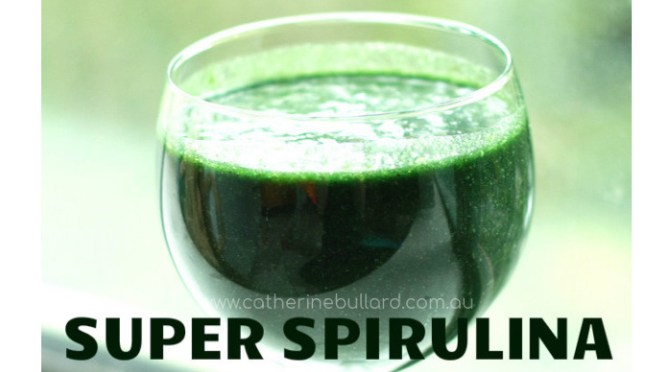
Spirulina is one of my favourite superfoods because it’s one of the most nutritious plant-like organisms known to humans. I regard spirulina as the ultimate superfood powerhouse. Although there are other super-greens such as chlorella, spirulina is almost like the supergreen equivalent of a multi-vitamin, a great all-rounder. Its nutritional benefits are both vast and impressive, making it an invaluable food especially for vegetarians, vegans, anaemics, diabetics and anyone who is nutritionally compromised.
Spirulina is one of the oldest life-forms on earth and it helped produce our oxygen-rich atmosphere billions of years ago. Actually, a blue green algae, it’s a 100% natural and highly nutritious micro water plant. It is found in both the ocean and large warm alkaline fresh water lakes.
Spirulina is so nutrient dense you could survive on it and water alone.
Spirulina, a Nutrient Powerhouse
Spirulina earns its superfood powerhouse status because it has the highest concentration of digestible vegetable protein (60-70%) with a perfectly balanced combination of essential amino acids. This is more protein than you will find in beef, chicken or soybeans.
One of the most common vitamin deficiencies found in a vegan or vegetarian diet is vitamin B12. When you consider that Spirulina also contains large amounts of Vitamin B12, which is very difficult to find in other plant foods, it is easy to understand why it makes such a great choice for vegetarians.
Spirulina is loaded with other nutrients in addition to B12. It is very rich in iron, which is a mineral that forms a very commonly deficiency. Spirulina also contains calcium, magnesium, and Vitamins A, B, C, D, E and K. There are also small amounts of a number of other minerals. Minerals are not always well absorbed in the body, but Spirulina actually improves mineral absorption. The abundance of minerals it contains can therefore be properly utilised by the body.
Spirulina is a wonderful plant source of the essential fatty acids linolenic acid (omega-3) and GLA (omega-6), offering a great source of essential fatty acids for anyone unable to get them from fish oil.
There is always some concern about the effect processing and long shelf storage has on nutrients. But Spirulina only grows in extremely warm conditions and so has the ability to withstand the high temperatures always involved in processing. It is able to retain its nutritional value unlike many other plant foods which deteriorate at these temperatures.
Spirulina is both low calorie and nutrient dense. It only contains 3.9 calories per gram and still has all of these great benefits.
The immune boosting qualities of spirulina can never be over stated. With its unique ability to fight infection, enhance cellular functioning, and even keep cancer at bay, it has a wide range of uses.
Health Benefits of Spirulina
Here are some ways that Spirulina is beneficial:
- Boosts energy, it is a source of life force or vitality
- Protection against viruses including flu, herpes, mumps and measles
- Promotes healthy nerve tissue
- Increases antioxidant protection to fight free radicals
- Improves digestion and gut health
- Improves age spots, eczema, acne, rashes
- Fights the ageing process,
- Curbs the appetite to assist weight loss
- Aids glaucoma, cataracts, poor vision
- Improves allergies & respiratory function
- Helps to detoxify radiation out of the body
- Plus, it fights heart disease, reduces arthritis, osteoporosis, diabetes and depression, and lowers bad cholesterol
Because it is so easily digested it packs a powerful punch when it comes to all these benefits.
How to Choose Quality Spirulina
Good quality Spirulina has no side effects, and this is one product that you need to be absolutely certain of the quality.
Contaminated blue-green algae is incredibly toxic to the system and can cause a range of fresh health problems such as liver damage. Because Spirulina easily absorbs nutrients from water, if the water contains pollution or heavy metals, these will be highly concentrated in the Spirulina cell. If this happens, then this affected Spirulina is no longer suitable for human consumption.
There are a number of Spirulina products on the market that are of questionable quality so select carefully. Either research well or buy from a qualified practitioner.
Spirulina Tablets or Powder?
Spirulina comes in powder or tablet form and it is easy to tell if it is good quality or not.
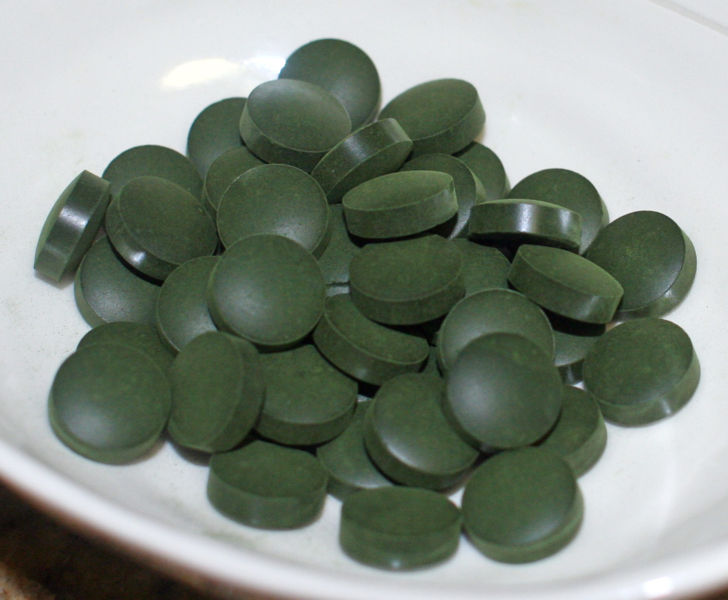
Quality spirulina tablets are made without sugar, starch fillers, animal parts, preservatives, stabilizers and colours. They are a uniform dark green colour without any light coloured specks.
You can take up to about twelve tablets a day, and some people take even more. But start out with three and increase to six over a couple of days. You can take them all at once or spread over two or three doses. The recommended dose for adults is 5-10 per day.
Powder is a better choice if you want to add spirulina to smoothies, juice or other foods. 100% pure powder is also a uniformly dark green colour. You feel the effects very quickly because the powder is easily digested.
You can take two or more tablespoons of Spirulina powder a day, but a good way to start is with one teaspoon (5 grams) added to drinks or other foods. The drink or smoothie colour will change to dark green but it doesn’t really affect the flavour. You can gradually increase the amount over time to two teaspoons (10gms) per drink.
I use the brand made by Green Nutritionals in my clinic as I know it to be high quality and free from toxic heavy metals. Just for the record, I have no affiliation with this company or product, and only recommend it to you to help your health. (I also like this one personally as it is easy to swallow.)
Final Thoughts
Because Spirulina is a natural food and NOT a supplement you can’t take too much. If you take more than you need it is like overeating.
When I am going on a long-haul flight I take lots of Spirulina on the day of the flight as well as the day before and the one after. It is part of my ‘flight regime’ to help overcome the bad effects of air travel.
If you are very run down or have a debilitating illness keep the amount of Spirulina you take low. You will still get enormous benefit from the smaller amount, and the smaller quantity will not push your body too fast or too hard.
Avoid alcohol, soft drinks or coffee for about 30 minutes after taking spirulina as these destroy some of the nutrients and enzymes.
People with hyperparathyroidism or phenylketonuria should not take spirulina.
Don’t overlook this nutrient dense food source. Spirulina provides many benefits which include lowering blood pressure, fighting cancer and detoxing heavy metals.

Disclaimer.
All information and opinions presented here are for information purposes only and are not intended as a substitute for professional advice offered during a consultation. Please consult with your health care provider before following any of the treatment suggested on this site, particularly if you have an ongoing health issue.
© Catherine Bullard and Happy Holistic Health, 2012. Unauthorised use and/or duplication of this material without express and written permission from this blog’s author and/or owner is strictly prohibited. Excerpts and links may be used, provided that full and clear credit is given to Catherine Bullard and Happy Holistic Health with appropriate and specific direction to the original content

