
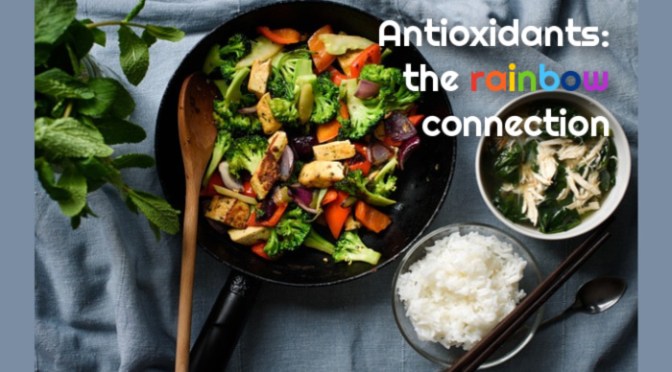
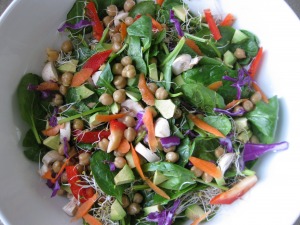
As I tossed my dinner in the wok tonight and marveled at the gorgeous array of colours, I was reminded of how bland the meals that I was served as a child always looked in comparison. They were always brown meat with some white (potato) and green (peas or beans) and maybe a touch of orange or red. The vegetables changed a little but always seemed to have the same look about them.
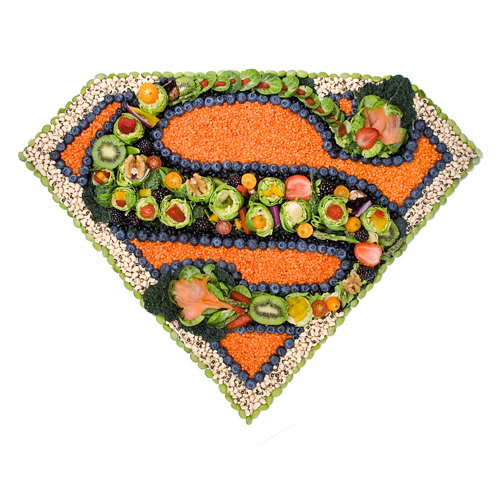
Today’s message in a nutshell is that when you always eat a ‘rainbow’ of fruit and vegetables with a naturally high color intensity you can be sure that you’re getting a wide range and good quantity of antioxidants.
Now, if all you want to know is the ‘what you need to do’ or you are too short of time today, then there you have it. Be conscious to always ‘EAT A RAINBOW’ and you will be sure to get a broad range of nutrients, including antioxidants, to help you combat free radical damage in your body.
But, if you would like to know ‘the why’ and the nitty gritty details, then read on
THE BODY”S DEFENCES
Cells need oxygen to metabolise vitamins and minerals, but when oxygen isn’t metabolized thoroughly it results in extra oxygen molecules hanging round which form free radicals. When you get a sudden rush of free radicals they cause a chain reaction that causes damage to the cells and leads to disease.
The body has its own antioxidant defence system of free radical scavenging enzymes but when there is too much stress put on us from our toxic environment and lifestyle our body gets overwhelmed by free radicals and we get sick. These scavenging enzymes need support from many minerals and vitamins that are not made by the body and must be gained from our food. Unfortunately, because there are so many stresses on the body from our modern world we now need far more antioxidants than were ever needed in the past.
WHAT EXACTLY ARE ANTIOXIDANTS?
Antioxidants are substances that remove potentially damaging oxidizing agents in a living organism. They are capable of neutralizing the effects of free radicals before they are able to cause damage in the cells and tissues of your body. They’re found in the form of vitamins, minerals, carotenoids and so on. Antioxidants have protective effects and can lower the risk of diseases such as cancer or heart disease.

There are a range of different antioxidants that act in different ways, and you can often tell which they are and what they will do by the colour of the food in which they occur.
There are over 4000 compounds with antioxidant properties – here are some of them:
|
antioxidant |
colours |
foods |
| vitamin C | various | oranges, citrus fruits, capsicum, mangos, kiwifruit, strawberries, blackcurrants |
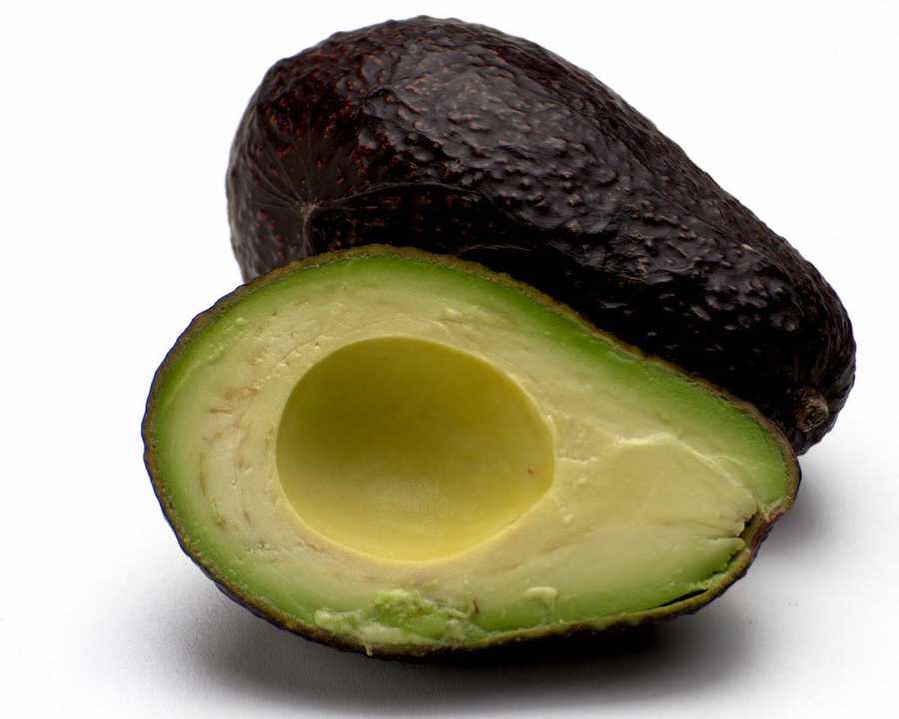
| vitamin E | various | avocado, nuts, vegetable oils |
| beta-carotene | orange, yellow, green | carrots, sweet potato, mangos, apricot, pumpkin, cantaloupe |
| anthocyanins | red, blue | blueberries, cranberries, raspberries, dark grapes, eggplants, red cabbage |
| catechins | tawny, red | cocoa, red wine, green tea, chocolate |
| cryptoxanthins | orange | mangoes, red capsicum, pumpkin |
| lycopene | red | tomato, watermelon, guava, strawberry, pink grapefruit |
| lutein | yellow, green | spinach, corn, gold kiwifruit, leafy greens |
| flavonoids | various | tea, green tea, citrus fruits, apples, red wine |
| selenium | white | brazil nuts, seafood, sunflower seeds, rice |
| isoflavenoids | soy products, lentils, milk | |
| lignans | white | flax seeds, sesame seeds, broccoli, curly kale, cabbage, wholegrains |
| manganese | red, green | nuts, berries, shellfish, legumes, leafy greens, sesame seeds, pumpkin seeds |
| polyphenols | green, red | thyme, oregano, rosemary, ginger, red wine |
| phenolic acid | various | apple, citrus fruit, oats |
These are just some of the foods associated with antioxidants. Some of the best overall sources are berries, walnuts, sunflower seeds, pomegranates and ginger.
WHAT ARE FREE RADICALS?
Free radicals are molecules produced in our body as a result of our everyday life. They cause oxidative stress in the body and basically feed off other cells to survive. In fact, your body produces free radicals as a by-product of metabolism.
Your body also produces a limited number of antioxidants to neutralize them, but when your body becomes overloaded with free radicals caused by outside stressors it is unable to cope and succumbs to a variety of illnesses. The cells of your immune system are the most likely to suffer damage initially. You may not even notice the effects but left unchecked the DNA held within the cell eventually becomes the target of the free radical damage. DNA acts as the ‘command centre’ of your cells so when it is damaged there can be significant and far-reaching effects.
Free radical damage accelerates the aging process and fosters many diseases. These include cancer, heart disease, arthritis, atherosclerosis, Parkinson’s disease, Alzheimer’s, Multiple Sclerosis, Hypertension, Diabetes, cataracts, macular degeneration, and almost all chronic degenerative diseases. Ultimately the effect of free radicals is to shorten your life.
There are many factors in our life in addition to ageing and basic metabolism that can increase free radicals production.
- The Western Diet creates a free radical bonanza! It is full of fats, processed foods, pesticides and chemicals, and with an emphasis on meat, dairy foods, sugar, processed ‘white’ grains, coffee and alcohol, that are all excellent free radical promoters. In addition it is deficient in fruits and vegetables, the source of antioxidants
- The chlorine in the water we drink results in free radical production
- The air we breathe is loaded with a multitude of pollutants, including tobacco smoke whether you actually smoke or not. We are surrounded by substances such as lead and asbestos and all these produce free radicals
- Fats in the diet, in the form of trans-fats, animal and other forms of fats. Many people consume excess quantities of fat, with it contributing around 30% of western food intake. Simply put, the more fat you eat the more free radicals are produced, and some fats are worse than others
- Pesticides are big producers of free radicals. They are found in large quantities in animal fat and present a significant free radical source if you are eating a meat-rich diet. These pesticides are stored in your body in fatty tissue. Non-organic fruit and vegetables also carry pesticides
- Free radical producing chemicals are found in solvents, cleaning products, glue, paint and thinners, as well as perfumes, and even prescription medications.
- Ionizing radiation from sunlight, X-rays or electro magnetic fields is another source. Body cells are very sensitive to radiation and even very mild exposure will set off the chain reaction within the cell.
- Even mental stress, including anger and anxiety can increase the presence of free radicals.
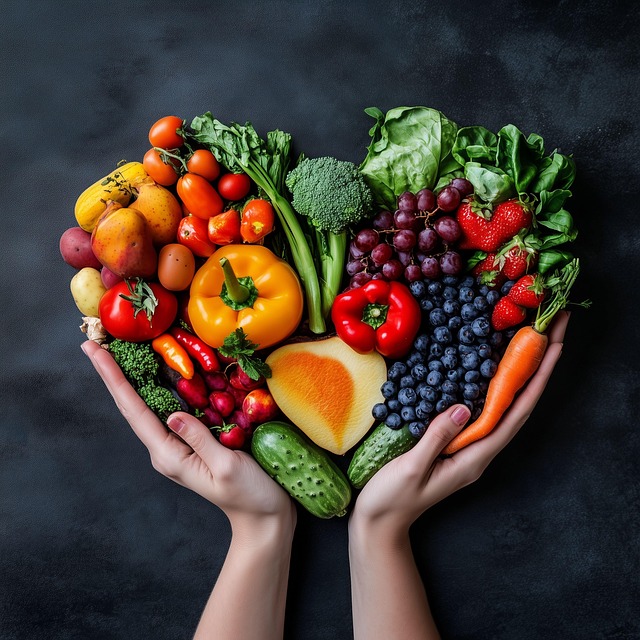
So, this is just another reason to get your daily dose of pesticide and chemical-free, antioxidant-rich, RAINBOW of fruit and vegetables! Be conscious of the foods you need and take the time to enjoy the beauty of a colourful diet.
Disclaimer.
All information and opinions presented here are for information only and are not intended as a substitute for professional advice offered during a consultation. Please consult with your health care provider before trying any of the treatment suggested on this site.
Source articles:
http://www.healingdaily.com/conditions/free-radicals.htm
http://www.naturaltherapypages.com.au/article/the_power_of_antioxidants#ixzz2HoOfDp34
http://www.naturalnews.com/024710_antioxidants_fruits_antioxidant.html
http://www.naturalnews.com/036992_antioxidants_best_sources_foods.html















 Happy Holistic Health