Category Archives: Sleep

Sure-Fire Strategies For Better Sleep

Giving advice for improved sleep is a normal part of any Wholistic Health practice, and I’m used to delivering. But today I am suffering the effects of a wakeful night after not ‘Walking My Talk’. Last night I sat up on the computer until well after midnight when the cold finally drove me to bed, only to then wake repeatedly through the night.

Sleep is so important, especially now as the days have shortened and we approach winter. Sufficient sleep allows our body to recover from the day and leads to improved brain function and memory.

But sleep doesn’t always come easily.


These simple actions will help you create a calm sleep-friendly environment.

De-Clutter and De- Junk

Is your bedroom a soothing sanctuary or is it also a place where you work? It is vital to establish and maintain the boundary between work and rest. Your bedroom needs to be a place where you unwind and take ‘you-time’. If the boundaries are unclear, you never get a break from the pressure and stress of work.

When you keep your bed for sleeping or other fun bedtime activities, your brain comes to associate bed with only these activities rather than work, which makes it easier for you to nod off.

Clear away clutter and mess; open the windows to refresh the energy; add fresh flowers, beautiful and meaningful ornaments, a candle or Himalayan Salt Lamp.

Create an EMF-Free Zone

If you are surrounded by electronic devices while you sleep your brain waves are affected throughout the night and you will never get good sleep. 

There’s some concern that the pulsed frequencies of electronic devices interfere with the body’s own signals. These electromagnetic fields (EMF’s) affect the emotions, the organs, hormone production and the immune system. Cosequently this can then lead to poor sleep, as well as many other problems.

There are many studies that show exposure to electronic devices (even electric lights) before going to bed interferes with sleep patterns. Far from allowing you to wind-down in the evening using electronic devices actually increase your alertness and interferes with REM sleep.

Light, from any source including the low levels of light emitted by electronic devices, disrupts circadian rhythms and causes poor sleep

There have also been studies into how electromagnetic fields (EMF’s) around electronic devices affect the release of melatonin, the sleep-inducing hormone. In 2007 this study showed melatonin production, and therefore sleep quality, may be affected in some people.

For good sleep switch off your smartphone, your tablet, your laptop, your TV, e-reader and other devices at the source. If you need an alarm to wake, find an alternative to your phone. Sleeping close to an active smartphone (or other device) is absolutely NOT worth the wide-reaching adverse effects it has on you.

If you do need to leave any devices switched on, make sure they are well away from your body, at least two metres. Even better if they are right across the room or in the en suite.

Check your bedroom for electro-magnetic fields and remove the responsible devices.

mobile phone

Create Peace

If you need entertainment before sleep place some books or magazines in your room, or perhaps a journal. Not only does journaling empty your mind of annoying thoughts that keep you awake, it’s also has many health benefits. Research even shows it strengthens the immune system and reduces the symptoms of asthma and rheumatoid arthritis.

Use your journal to establish gratitude practices to build your Happiness Bank.

Check the temperature. A moderate temperature about 20 degrees Celsius, not warmer, supports undisturbed sleep.

Darkness helps you sleep and even small amounts of light interrupt the production of the neurotransmitters needed for sound sleep. Use block-out curtains if there are lights outside your window. Don’t turn lights on suddenly during the night as they disrupt the production of the sleep-inducing hormones, melatonin and serotonin. Don’t use white light as a night light. The soft pink glow of a Himalayan Salt Lamp solves this problem, if you must have light in the bedroom. If you can’t block out light wear an eye mask.

Music is a wonderful aid to help you relax. Gentle, music, white noise or relaxation recordings will all help you unwind. The rhythmic sound of the surf washing onto the beach is one way to induce sleepiness.

No TV right before bed! Stop about thirty minutes before retiring and definitely don’t watch it in bed.

Turn your bedroom into a space you look forward to spending time in.


Create A Scent-sual Space

 Our sense of smell plays an important role in mood, memory and emotions. It is linked to the limbic system, which is considered the old primitive part of the brain. As well as promoting relaxation, research shows that certain bedtime scents can even influence the type of dreams people have.

There are a number of essential oils that induce relaxation and are powerful sleep aids.

Lavender stimulates the release of feel-good hormones and is a well known relaxant to help insomnia. Sprinkle a few drops of lavender essential oil on a cotton ball beside your pillow or in your room.

Vanilla, rose, chamomile, sandalwood and surprisingly, coffee are some others that can also help insomnia by calming you. (Although homeopathic Coffea is known to have excellent calming properties, and so maybe it’s not such a surprise!) 

Create A Healthy Eating Plan

 Shunning caffeine should be a no-brainer. Drinking coffee, tea or hot chocolate keeps some people awake. But many other foods such as soft drinks, processed foods and even medications often contain caffeine, and you need to be wary of those.

Some foods like dairy and wheat can cause gastric disturbances that may keep you awake. Avoid them altogether or at least in the later part of the day.

L-tryptophan found in protein foods promotes the production of melatonin and serotonin to aid sleep. A small protein-rich snack such as nuts in the evening may help you sleep better.

Avoid sugar and processed grain snacks before bed to avoid the rapid spikes and drops in blood sugars that interrupt sleep.

Alcohol is a ‘no-no’ for sound sleep. Although it produces sleepiness and initially sends you to sleep, it prevents you entering the deeper, restorative, sleep cycles.  Also, alcohol’s effect is short-lived. After a few hours you are likely to wake up, completely unable to return to sleep.

Chamomile tea before bed is an excellent for promoting good sleep. It has a slight homeopathic effect to relieve anxiety and promote relaxation.

Support your body with nurturing foods to create balance

Create A Sleep-Ready Body

Exercising daily for at least thirty minutes helps you fall asleep but be sure not to do it too close to bedtime. This is because exercise stimulates the release of metabolising hormones that will keep you awake.

Create A Night-Time Ritual

Setting a bed-time ritual sends cues to your brain that it is time for it to prepare to sleep.  Just as you might read a bed-time story to a child to help them relax before they sleep, setting routines also reminds your mind it’s time to relax and sleep.

Develop your own night-time routine.  It may include a warm bath, some yoga, reading, listening to music, writing your journal, in fact anything that soothes and relaxes you.  Repeat this every evening in the thirty minutes before bed so your brain and body associate this activity with sleep.

Write down your list of whatever you need to do in the morning, earlier in the evening before.  This shuts down the ideas and thoughts that normally run around your head while you’re trying to drop off to sleep.  The same goes for any plans, worries or other thoughts that might keep you awake into the early hours of the morning.

Going to bed at the same time each night and rising at the same time each day allows your body clock to synchronise with these times, making both sleep and waking easier.

A hot shower or bath before bed increases your body temperature.  As it falls again you will relax and fall asleep. If you have cold feet warm them with socks to prevent sleep disturbance.

If noise wakes you or keeps you awake wear ear plugs.

Take time to reflect on the day passed as well as the brand-new day ahead, so you can leave stress behind and start the new day afresh.

If you can’t sleep get up and address the cause or do some quiet activity until you feel calm and ready to return to bed.

Don’t watch the clock! If you aren’t sleeping put the clock away. Watching the hours tick away will only leave you stressed

Sleep Problems of Menopause

For some women passing through menopause, insomnia becomes a real and distressing issue.  Hormonal changes causing hot flushes, palpitations, or night sweats can interrupt sleep and cause havoc.  Before taking Hormonal replacement Therapy (HRT) have a talk to a Wholistic Health Practitioner about the many natural options available to balance hormones and reduce these debilitating symptoms.

Creating an environment that nurtures and supports you allows your body to release the stress from your busy life and relax into sleep at night

What are your favourite ways to ensure you get good sleep? Tell us in the comments below.
Disclaimer

All information and opinions presented here are for information purposes only and are not intended as a substitute for professional advice offered during a consultation. Please consult with your health care provider before following any of the treatment suggested on this site, particularly if you have an ongoing health issue.

  © Catherine Bullard and Happy Holistic Health, 2012. Unauthorised use and/or duplication of this material without express and written permission from this blog’s author and/or owner is strictly prohibited. Excerpts and links may be used, provided that full and clear credit is given to Catherine Bullard and Happy Holistic Health with appropriate and specific direction to the original content

Do You Dream Of Dreaming…If Only You Could Fall Sleep?

It seems almost everyone I’ve spoken to over the past week has had problems sleeping, whether it’s in getting to sleep, waking during the night or, for those that are sleeping, having vivid crazy dreams. Insomnia, or sleeplessness, can be either an inability to fall asleep or waking up through the night before the expected waking time. As anyone who has ever experienced a poor night’s sleep knows, the impact of sleeplessness shows up the next day as a reduced ability to concentrate, lethargy, and fragile emotions.

The body actually requires sleep just as it does water, food and oxygen in order to function. Without sleep we would literally go crazy. When insomnia is long term, more than 3-4 weeks, it can have a major impact on our health, leading to memory problems, depression, irritability, with an increased risk of heart disease.

Tossing and turning for hours on end, worrying about not being able to get to sleep, or being unable to switch off can be very frustrating, and can even worsen the insomnia. The more you try to sleep, the more frustrated you get and the harder sleep becomes.

For many people insomnia is an ongoing issue that has some pretty big repercussions on their life. While it can be caused by many things, for a large number it is often the result of poor sleep behaviour, sometimes resulting from patterns established during childhood.

Some Causes of Poor Sleep

Quite a number of poor lifestyle habits can actually be the cause or sleeplessness, or else worsen it. Here are a few of them. If you recognise any of these, you may need to address them.

·         Going to bed at different times each night

·         Daytime napping

·         Poor sleeping environment, such as too much noise or light. Your bedroom should be a ‘haven of calm’

·         Spending too much time in bed while you are still awake

·         Working evening or night shifts

·         Not getting enough exercise

·         Using the television, computer, or smartphone in bed 

Medications

The use of some medications and drugs may also affect sleep.

  • Alcohol may help you fall asleep initially but generally leads to waking up through the night.
  • Too much caffeine is a well-known cause of insomnia, especially when it is drunk later in the day.
  • A number of medications, including cold medicines and diet pills can cause poor sleep. Be very careful about self-prescribing unless you know exactly the effects of whatever you are taking. Some herbs and supplements can lead to insomnia.
  • Heavy smoking can be a problem for sleep.
  • If you take sleeping pills regularly it is easy to become used to them, so they stop working as well as they did initially.
Lifestyle

In addition to lifestyle habits there are a number of other physical, social, and mental health issues that can affect sleep patterns, including: anxiety disorders, bipolar disorder, certain medical conditions such as thyroid disease, feeling sad or depressed, physical pain or discomfort, stress whether it is short-term or long-term.

CIRCADIAN RHYTHMS

However sometimes there is just no obvious reason for sleeplessness.

We each have our own inbuilt body clock called the circadian rhythm, that regulates our sleep patterns. This is what makes us fall asleep at night and wake up again the next morning. The body clock is easily thrown out by overseas flying, rotating shift work, or even a few late nights. When your body clock gets disrupted, you experience symptoms like jet lag.

Taking sleeping pills to help you sleep often leaves you with a ‘hangover’ effect which is something you can avoid by using natural cures instead.

RESET YOUR BODY CLOCK NATURALLY

For many the prospect of sleeping like a baby, anywhere, anytime seems like a remote daydream. But there are a number of very effective natural remedies with proven success that may offer relief. They can help you to reset the body clock so you can get back to good sleeping patterns.

Here are a few that have proven success.

For many the prospect of sleeping like a baby, anywhere, anytime seems like a remote daydream. There are some natural remedies with proven success that may offer relief.

Melatonin

Melatonin is a hormone secreted by the pineal gland in the brain which helps to relax us so that we can fall asleep. It is known for its ability to rebalance your body clock and is often used to treat jet lag. It is usually released in the absence of light, but we need to have spent time in daylight in order to make enough melatonin in the first place. This is why it is recommended that you spend time outside after you have flown a long-haul flight.

Taking a melatonin supplement can help to reset the body clock. But if you prefer to use food as medicine you can address melatonin deficiency with foods that boost serotonin as melatonin is made from serotonin. Some of these foods are raw cacao, magnesium, fish oils and herbal tea containing hops, chamomile, ashwaganda and lemon balm.

Homeopathy

Homeopathy has a marvelous history treating insomnia. There are many Homeopathic remedies that work to reset your body’s sleep patterns, calm your mind and get restful sleep. While there are a number of combination mixes available over the counter, the ones that have the deepest and most long-lasting effect are those that are prescribed individually by a Homeopath to suit your individual insomnia symptoms.

Some remedies that a Homeopathic practitioner may consider for insomnia are:

  • Arsenicum Album which is useful when anxiety, fear, or worry prevents sleep
  • Coffea for when you are unable to sleep because your thoughts are too active or you are excited about a surprise, or good or bad news
  • Nux-vomica helps when you’re very irritable, waking between 2-4am with racing thoughts only to fall asleep again about daybreak. This is accompanied by much stress caused by overstudy or work
  • Ignatia is for sleeplessness after disappointment or grief
  • Passiflora for restless sleeplessness with exhaustion

The choice between these and many more homeopathic remedies that help with insomnia would depend on these and all the other symptoms you were experiencing. For good results check with a professional Homeopath as remedies need to be selected and taken according to homeopathic principles.

Herbs

There is a number of herbs that are very useful to induce sleep. Valerian root is one that is quite well known and often used. It is quite powerful and often used for quick results when changing time zones. Valerian is useful when you have difficulty staying asleep. Some people however get the opposite effect from valerian and can get hyped-up after taking it. Valerian is good when combined with Passionflower which helps you to fall asleep initially.

Some other herbs that can be helpful are Kava which is once again available after having been taken off the market for a while. It can be used for short-term relief. It is good to relieve anxiety in the moment.

Skullcap is great to use when you are very hyped-up and just can’t slow down, or are experiencing anxiety and are emotionally stressed. You can use it for longer periods.

Aromatherapy

Essential Oils can help bring on sleep. While there are a number of oils that induce sleep, lavender has long been recognised as being the ‘Queen of Calm’. Lavender essential oil will effectively calm down overwrought nervous systems. A few drops added to a warm bath before bed or on a cotton ball under the pillow should bring on sleep.

SETTING A PERFECT SLEEP ENVIRONMENT

Make sure your sleeping environment is calm and serene. THE KEY IS TO SWITCH OFF. Leave your worries at the bedroom door. Switch off all gadgets, put phones in flight mode, iPad, laptop, TV etc. Take some time to settle down and relax.

Set aside 30 minutes before bed as ‘unwind and de-stress time’. Read a good book, write your journal, listen to soft music, anything that you find relaxes you and does not involve an electronic gadget. Remember, exposure to artificial light (electronics) before going to bed increases your alertness and suppresses melatonin and so will keep you awake.

So, here’s to a great sleep.

What are some of the ways you deal with sleeplessness? Tell us in the comments below

Worrying about not being able to get to sleep can worsen the insomnia

Disclaimer.

All information and opinions presented here are for information only and are not intended as a substitute for professional advice offered during a consultation. Please consult with your health care provider before trying any of the treatment suggested on this site. 

    Get Down To Earth By Grounding Yourself

    This year I decided to ditch my footwear inside the house, ever since learning more about Barefoot Earthing or Grounding. This is a radical new health practice that is quickly gaining momentum as word about its benefits spreads. Its impact can be quite far-reaching and yet it is incredibly simple to do, costs nothing, is always available and feels great.

    Have you ever noticed how good you feel when you take off your shoes to walk barefoot? Well it seems there is a scientific explanation, and research into the practice of Grounding has found that it can significantly improve all sorts of health problems. It can help your energy levels, reduce stress, improve your sleep, decrease muscular inflammation and stiffness as well as other chronic pain, reduce anxiety, improve circulation, prevent free-radical damage and associated premature ageing and even heal injuries faster. It brings you back into a state of equilibrium where your body is best able to heal itself. Those who use the practice on a regular basis report great results. I am certainly finding I have less aches and pains whenever I walk round without shoes than when I leave them on.

    It all has to do with electrical fields.

    These days we live completely immersed in electro-magnetic waves (EMFs) from a huge number of everyday items including mobile phones, computers, wireless technology, many electrical appliances, and even compact fluorescent lights. The air in our houses, our workplaces, our schools and in some outdoor places is full of electro-pollution, harmful positive ions produced by this multitude of electrical contraptions that surround us.

    These positive ions contribute to ill health.

    Electrical Stress

    Electrical stress is now recognized as a significant contributor to many health problems and in fact a new chronic illness. The term ‘Diabetes Type 3’, has been coined to describe illness believed to be caused by electropollution. 

    Surrounding yourself with sources of negative ions helps rebalance this disharmony, as does being in places where negative ions are in abundance such as waterfalls or the ocean.

    The surface of the earth is electrically conductive and has a permanent supply of free electrons sitting just above the surface. The charge on the earth surface is negative and anything that is close to the surface will also carry that charge.

    Your body also has an electrical field, sometimes referred to as the biofield or the aura. When your bare feet are in contact with the earth negative electrons can easily pass into you.

    Grounding allows an electron exchange between you and the earth. This helps to prevent a build-up of harmful electrons in your body as well as promoting a discharge of the positive ions from your body into the earth. Simultaneously you receive a flood of free electrons from the earth.

    When the ions within your body and within the Earth are different an ion exchange occurs. This neutralizes free radicals in your body which cause inflammation and are responsible for many health problems. The flood of electrons immediately ‘re-balances’ you, which is why you feel so good when you walk outside barefoot.

    In case you got lost in that explanation, simply, standing on the earth rebalances the electromagnetic field of your body, helping to strengthen your immune system, and boosting both your health and your wellbeing.

    For most of our existence humans have gone barefoot and often slept directly on the ground. Things now are very different. As well as being surrounded by electromagnetic pollution we are cut off from receiving the rebalancing benefits from the earth because the shoes that we now wear have rubber and synthetic soles that insulate and block transmission of the natural beneficial energy of the earth. It’s just like how rubber gloves can provide protection from electrical shock. Your shoes act in much the same way.

    How to Ground Yourself

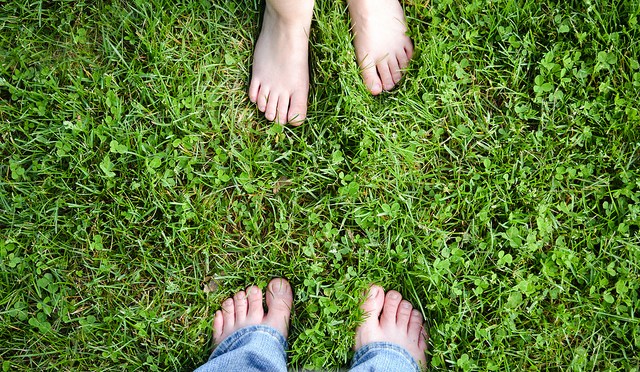
    Take your shoes off and stand or walk barefoot on grass, beach, bare earth, even concrete when it is laid directly on the earth, although not if it’s painted or sealed, whenever you can.

    To gain the full health benefit you need to walk around on the earth for about thirty minutes.

    Other ways to ground yourself and reap the benefits are to swim in lakes, rivers, or the sea; wear shoes with leather soles; purchase and use an indoor grounding mat or an earthing bed sheet.

    The reason I am able to benefit from earthing when walking barefoot indoors is because my floor is made of unglazed slate sitting on a concrete slab which is set directly onto a rock shelf on the side of a hill. There are no substances between my feet and the Earth that block the passage of negative ions. You would not get earthing benefit in a home raised above the ground, or with glazed tiles covering the floor, or a layer between the concrete and tile, or with other floor coverings.

    If you would like to read up on Earthing get a copy of the book EARTHING – The Most Important Health Discovery Ever?  by Clint Ober, Dr Stephen T Sinatra and Martin Zucker.

    Remember though, Grounding is not a substitute for medical treatment and if you have a medical condition you need to consult your healthcare provider.

    Taking your shoes off and walking barefoot in the sea helps to rebalance your energetic field.

    Disclaimer.

    All information and opinions presented here are for information only and are not intended as a substitute for professional advice offered during a consultation. Please consult with your health care provider before trying any of the treatment suggested on this site. 

    © Catherine Bullard and Happy Holistic Health, 2024. Unauthorised use and/or duplication of this material without express and written permission from this blog’s author and/or owner is strictly prohibited. Excerpts and links may be used, provided that full and clear credit is given to Catherine Bullard and Happy Holistic Health with appropriate and specific direction to the original content.

    Source articles:

    http://www.barefoothealing.com.au/

    https://www.naturalnews.com/028967_electropollution_diabetes.html

    http://articles.mercola.com/sites/articles/archive/2012/11/04/why-does-walking-barefoot-on-the-earth-make-you-feel-better.aspx

    Sure-fire Strategies to Beat After-lunch ‘Sleepies’

    Are you someone who finds that come mid-afternoon it is all you can do to keep your eyes open? You are certainly not alone as millions of others share your dilemma. But before you reach for that can of energy drink or cup of coffee to help you see out the day, consider a more natural alternative. It is possible to keep energy levels relatively stable throughout the day, so you don’t end up simply staring off into space after lunch. Here are some ways to help you avoid that energy crash in the first place – there’s sure to be one that works for you!

    Why You Crash Mid-Afternoon

    There are a number of reasons why you might be experiencing the afternoon slump just as there are a number of techniques you can do to snap yourself out of it when your eyelids start to drop. But if you want a significant change in energy fluctuations you need to make permanent changes to whatever is acting as a trigger for your energy lows.

    There are many ailments that can cause you to feel tired after lunch, such as allergies, insulin resistance, celiac disease or low blood sugar. But your tiredness may be due to something as simple as eating a big lunch. Digestion requires quite a lot of energy and as your stomach loads up with food extra blood rushes into your intestines from all over your body to help with the extra work. This leaves the rest of your body, including your brain somewhat deprived, with the result that you start to feel exhausted. Eat a big breakfast and opt for a smaller, light lunch.

    Better Lunch Choices

    There are many lunch choices that can lie behind afternoon ‘sleepies’. Meat is one of the hardest foods to digest so avoiding meat at lunch may be a wise choice to fight off fatigue. It takes two hours to digest meat compared with only thirty minutes to digest fruit. Eating a meatless lunch will place a lot less stress on your digestive system and keep blood flowing to the brain and lungs.

    Don’t forget to chew your lunch really well as saliva is loaded with enzymes that start off the digestion process. The more the saliva has broken down by the food when it reaches your stomach, the easier it will for your body to continue the process through the gut and the less likely it will be for you to feel tired.

    Gluten Intolerance

    An intolerance to gluten, the protein found in some grains, can cause after-lunch fatigue in anyone suffering from coeliac disease if they’ve eaten foods containing gluten at lunch. But many people have a gluten intolerance without actually having coeliac disease. They also benefit from removing gluten from their diet. Have this checked out if you suspect gluten intolerance is behind your tiredness.

    Hypoglyceamia

    Another reason for many people experiencing low energy level between one and four hours after eating is hypoglyceamia. Eating a lunch high in refined carbohydrates causes the blood sugars to rise rapidly, or spike. This is followed a few hours later with a crash in blood sugars that results in fatigue, often with dizziness or shakiness. The onset will often be faster if you exercise as well. A lunch of vegetables and protein is a much better choice than refined carbohydrates. Low GI food alternatives you could look at include most fruits and vegetables, lentils, beans, hummus, quinoa, nuts and seeds. You can find a list of the GI Index rating of lots of foods here

    Insulin resistance

    Another sugar related cause of fatigue after eating may be insulin resistance. When excess sugar or carbohydrates are eaten the body produces more insulin, but over time your cells start to resist the insulin which leads to all sorts of health conditions, including fatigue.

    Caffeine

    One cause of afternoon tiredness that is often overlooked is caffeine. Drinking two or three cups of coffee in the morning may get you going but you pay for it later. As well as the short-lived burst of energy that caffeine provides to you, it also contributes to dehydration, a leading cause of fatigue. Think of coffee as ‘credit-card’ food (eat now, pay later)

    Studies show that a single cup of coffee is sufficient to keep long-haul truck drivers more alert so replace that second coffee with a large glass of water. And more importantly, don’t use caffeine as an afternoon pick-up. If you find you absolutely must have some caffeine drink green tea instead. As well as the mild dose of caffeine it contains you will receive all the other health benefits green tea offers. Tulsi tea is another excellent afternoon energizer especially if adrenal fatigue is playing a part.

    Don’t forget that caffeine is like any drug and your body will develop a caffeine tolerance, so that where you only needed one cup originally after time you might find you need six or even ten to get the energy burst you need.

    Posture

    Most people working in an office sit hunched over their computer for most of the day. As fatigue hits in the afternoon, they tend to slump down over their desk even further. Sitting up straight with shoulders back, eyes forward and lower back arched slightly, and taking good deep breaths right down into the bottom of the lungs can re-energise you very quickly. Stand up and add a few stretches for even more benefit.

    Electro Magnetic Fields

    Being surrounded by EMF’s (often called electromagnetic radiation) can cause fatigue and these are always high around any electric equipment. EMFs are especially high around wireless devices such as computers, wireless phones, printers, laptops, mobile phones, baby monitors, internet connections etc. So getting away from your desk or taking steps to reduce the effects will help keep you more alert.

    Body Clock

    If you’re living somewhere the sun sets during the afternoon in winter, afternoon fatigue may also be due to your own body clock. As the day starts to get dark about mid-afternoon your body temperature drops and the hormone melatonin, which makes you feel sleepy, is released. Circadian rhythms contribute to how alert you feel so open the curtains to let in the sunlight or else simply turn on more lights if it is dark outside.

    Watch your sleep routine. Sleep recharges your body physically and mentally. Get into a regular routine of going to bed and waking up at the same time and stick to it. You need seven to eight hours sleep a night. Studies have shown that ‘Binge Sleeping’ on the weekend does not counteract the sleep debt from the other nights of the week. If you don’t get enough sleep, fatigue is likely to be the result. Go to bed and wake up at the same time every day, including weekends, for more energy.

    Breathe

    Studies have shown that deep breathing can relieve general fatigue. Discover how to correctly deep breathe.

    Natural Strategies to Fight Fatigue

    If, in spite of taking measures to address the cause of your tiredness, you still find yourself falling asleep in the after-lunch meeting, these strategies may help in the moment:

    Peppermint

    Research shows that the aroma of peppermint is a natural remedy for boosting memory, focus and concentration. It is just as effective whether it is fresh leaves, essential oil or brewed tea. Enjoy a cup of peppermint tea, spray a mist of a few drops of peppermint essential oil in a cup of water about your workspace, or even place a few drops of the oil on a handkerchief to sniff. Or keep a pot of mint nearby and crush a couple of leaves during the afternoon

    Cinnamon

    If your tiredness is related to blood sugar imbalance chewing a cinnamon stick might help as it has been shown to have a significant influence on regulating blood sugars

    Power Nap

    If you are able to get away briefly a quick power nap in your car could be just enough to revive you

    Music

    Listening to music has been shown to raise endorphin levels which makes you feel happier. Play your favourite music or sing out loud to get you motivated again.

    Water

    Dehydration causes fatigue so drink some water, or even eat some foods with a high water content like lettuce or watermelon, and combine it with a walk to the water cooler to get away from your desk.

    Protein

    Protein from nuts or yoghurt makes a good snack when you start to slump in the afternoon

    Exercise

    Get up and run up the stairs or around the block if you can. It starts the blood pumping and gives the brain a boost.

    Meditate

    Meditate – yes seriously, just a five minute meditation at your desk is enough to clear out your head and revive, refresh and recharge you.

    Warmth

    Just as animals hibernate when the weather turns cold, getting too cold can make you feel sleepy too, so throw on a jumper or turn up the heating to wake yourself up (this is usually a big help for me!)

    WFH

    And if you are lucky enough to work from home or your workplace is a little more free you could do some exercises or hit the gym, turn the music up really loud, take a short cold shower or do some yoga

    What are some of the ways that you manage the mid-afternoon ‘sleepies’?


    Disclaimer.

    All information and opinions presented here are for information only and are not intended as a substitute for professional advice offered during a consultation. Please consult with your health care provider before trying any of the treatment suggested on this site. 

    © Catherine Bullard and Happy Holistic Health, 2012. Unauthorised use and/or duplication of this material without express and written permission from this blog’s author and/or owner is strictly prohibited. Excerpts and links may be used, provided that full and clear credit is given to Catherine Bullard and Happy Holistic Health with appropriate and specific direction to the original content.

    Source articles:

    http://www.naturalnews.com/034368_aromatherapy_peppermint_memory.html#ixzz2NJuFpNiJ

    http://greatist.com/happiness/28-scientifically-proven-ways-boost-energy-instantly

    Fight Depression With These Simple Strategies

    As you read this post Mental Health Awareness week has finished but the battle that is depression goes on for many people.

    Commonly Depression is treated with drugs that flood the brain with serotonin. While it is important to address depression, there have not been scientific studies that show that this drug therapy really works, and in fact, a number of experiments where the serotonin levels in the brain were greatly increased, failed.

    However, there are other methods that can be used to help relieve depression.

    • A therapist can help you with new ways to look at yourself and your life.
    • Adequate sleep makes you less susceptible to the negative messages that seem to swamp you. (I’ll write more about good sleep habits in a later post).
    • Exercise three times a week, difficult though it always is to get motivated, always helps lift your mood by altering brain chemistry. It doesn’t have to be at the gym as walking is always good and yoga is great too.
    • Structure helps, so getting into a routine is a good idea.
    • Keeping in touch with other people who love and support you is worth heaps, and if you can’t do that, then just getting out and being around people, anyone, will help. Even better if they have a laugh with you.
    • Getting lots of sunshine is also good as natural light has been proven as a cure for depression.
    • There are also lots of mood boosting supplements, like maca, that will help.

    Food For Depression

    Another major way of fighting depression is through good nutrition, even though because of the depression you may not be feeling hungry.

    Preparing and eating a meal might seem pointless but not only do the nutrients contribute to lifting your depression, it will also help you avoid the junk foods that make your depression worse. Don’t even buy or store sugary or salty snacks in your cupboards – it is far better to have simple healthy foods that don’t need lots of preparation to use when you find you are simply not able to face meal preparation.Foods like coffee, meat, alcohol and fatty or fast foods can actually make you feel more depressed and you will feel a lot different if you avoid them.

    It really is a case of “you are what you eat”, bad foods make you feel worse and good healthy foods make you feel better.

    Top foods to fight depression

    1. Fish Oils:

    Yes this is another benefit of fish oils as the right kind of fish contain lots of omega-3 fatty acids, often lacking in depressed people. One study showed that taking just one gram of fish oil each day made a 50% difference in symptoms like anxiety, sleep problems, feelings of sadness, decreased sex drive and suicidal thoughts. You can also get omega-3’s through eating other foods including walnuts, flaxseed oil, or chia seeds. Oily fish include sardines, tuna, wild-caught salmon, gemfish plus others.

    2. Brown Rice:

    A great high-fibre food, brown rice contains lots of Vitamin B, B1, B3 and folic acid, plus lots of trace minerals which you need to function properly. It is also low-glycaemic, releasing glucose into the bloodstream slowly to prevent mood swings due to sugar-lows. You need to avoid any “instant” or “quick-cook” varieties because they don’t have any of these benefits.

    3. Brewer’s Yeast:

    The “darling food” of the 70’s, brewers yeast also contains B Vitamins (B1, B2 and B3). Don’t take this if your yeast tolerance is not great, but otherwise get your daily dose by mixing a thimbleful into a smoothie. It has heaps of vitamins and minerals in a small package, including amino acids which are great for the nervous system, and awesome for dealing with depression

    4. Whole-grain Oats:

    Again, you can’t use “instant” or “quick cook” oat varieties as they won’t help. With heaps of B vitamins (folic acid, pantothenic acid, B6 and B1) wholegrain oats help lower cholesterol, soothe the digestive tract and help prevent “sugar crashes,” so they assist with crabby moods and mood swings.

    5. Cabbage:

    With Vitamin C and folic acid cabbage protects against stress, infection and heart disease as well as lots of cancers (American Assoc for Cancer Research). There are lots of ways to eat it apart from boiled into a nasty mess – try it tossed in a salad or a wrap instead of lettuce, perfect in a stir fry, in a cabbage soup or just juice it. If you have trouble digesting cabbage add some fennel, caraway or cumin seeds before cooking. Or you could drink these spices in a non-caffeinated tea.

    6. Other Foods

    There are also a few other foods worth a mention here.

    • Grains like quinoa, kamut or spelt are better choices than refined grains like white wheat flour. Wholegrains are one great place to find the B vitamins which help improve your mood.
    • Foods like raw cacao (not a block of milk chocolate!), dark molasses and brazil nuts, which are high in selenium, are also great depression eliminators
    • Make sure your diet is loaded up with fruit and vegetables which will provide lots of vitamins and minerals to help lift the clouds that surround you. And remember that there is a big difference between both the amounts, and the quality, of the nutrients in organic and commercially grown produce. Organic foods have significantly higher levels of the nutrients you need than are found in commercially grown crops.
    • It is pretty important to try and keep your blood sugar levels stable and also to get enough B vitamins when you are feeling depressed. Avoiding sugar altogether helps stop blood sugar spikes and dips.

    In the end it is important to remember that depression does not last, it is a transient phenomena and will pass. In the meantime take the decision to be proactive and make the changes you need to make to move on.  Even just setting this goal is the first step in moving forward.

    Fight depression with diet

    Disclaimer.

    All information and opinions presented here are for information only and are not intended as a substitute for professional advice offered during a consultation. Please consult with your health care provider before trying any of the treatment suggested on this site. 

    For more information:

    http://www.naturalnews.com/020611.html

    http://voices.yahoo.com/how-fight-depression-daily-habits-all-200108.html?cat=72

    http://www.naturalnews.com/035463_depression_herbs_remedies.html

    http://www.thedailymind.com/stress/5-small-but-big-ways-to-beat-depression-every-time/

    http://www.webmd.com/depression/features/natural-treatments

    © Catherine Bullard and Happy Holistic Health, 2012. Unauthorized use and/or duplication of this material without express and written permission from this blog’s author and/or owner is strictly prohibited. Excerpts and links may be used, provided that full and clear credit is given to Catherine Bullard and Happy Holistic Health with appropriate and specific direction to the original content.