Category Archives: Uncategorized

Pay Attention With Mindfulness

Create Calm Through Conscious Awareness

Mindfulness is the art of being present and 
accepting the moment, as it is.

Mindfulness is the energy of being both aware and awake to the present moment. It is the ongoing practice of engaging fully in every moment of daily life and accepting it without judgement. It is about simply Being instead of constantly Doing.

Recently I was reading about mindfulness while I was eating a slice of toast.  As I continued to read, I suddenly became very conscious of the irony of my situation.  Engrossed in the internet, with thoughts of what I needed to do during the day running around in the background, I was eating in a way totally lacking in mindfulness.

So I stopped reading and focused on the delicious food.  I immersed myself in experiencing the bread toasted so that just the outside was crunchy and the centre still moist; the tang of the sourdough culture; the seeds coating the crust; the sweetness of warm butter which had soaked through into the heart.

I noticed the autumn sun pouring in through the window and the small birds hopping along the branches outside. 

At one point I began thinking about writing this post about mindfulness, but being mindful, I put the thought aside and focused on eating the toast again. Truly, I tasted and enjoyed that piece of toast far more deeply than many I have eaten. It was all the more delicious because I was focused in the moment.

“When we are mindful, deeply in touch with the
present moment, our understanding of what
is going on deepens, and we begin to be
filled with acceptance, joy, peace and love.”

Thich Nhat Hanh

My distraction while I was eating is completely normal. Human consciousness focuses on a lively dance between revisiting past events and anticipating the future. But developing mindfulness in our daily routine can have a very positive impact on our lives as well as our health.

Conscious Awareness

Mindfulness is a hot topic right now, but it’s nothing new. It involves the art of consciously living in the present moment without getting drawn into the drama.

At its simplest mindfulness can be likened to awareness with intent.  It’s about using awareness to observe and notice in an open and curious way. 

Mindfulness and intentional awareness are both about paying attention with purpose. They are like being in the eye-of-the-storm and still being able to consciously hold the place of stillness, while all around is chaos. They allow you to live in the here and now, noticing with clarity the reality behind what’s appears to be going on, while remaining emotionally detached.

Mindfulness Changes Your Brain

This mindfulness practice of touching life deeply in every moment of daily life brings heightened awareness and inner calm.

When we practice mindfulness, we become more open to noticing what is happening in our lives, with greater clarity. Everyday problems do not disappear. But because we are fully present in our lives through the practice, we become able to respond to life’s pressures in a much calmer way. 

Developing and strengthening your awareness with mindfulness can transform your brain by changing or creating new circuits particularly those involved in stress, attention and focus, memory and mood. Mindfulness changes the way neurons in your brain communicate with each other. This opens the opportunity for you to interact and respond to your experiences and the world around you in a whole new way.

Mindfulness also helps us avoid self-judgement and self-criticism as we become more accepting of both our strengths and our challenges. This brings significant health benefits to our body, our mind and our soul.

Embracing the energy of mindfulness and allowing it to flow into our lives to penetrate everything we do provides us with the opportunity to foster the development of grace within. 

It deepens our capacity to live more meaningful, balanced and peaceful lives.

Origins of Mindfulness

The ancient practice of mindfulness has come to us through many eastern philosophies including Buddhism, Yoga, Tai Chi and Taoism. It’s now embraced by the West and widely taught in a non-sectarian way because it is a proven effective tool to treat many psychological clinical disorders.

Thich Nhat Hanh, a Vietnamese Buddhist monk, teacher, author, poet and peace activist, taught the art of mindfulness throughout his lifetime. Initially he taught it through the practice of mindful breathing and later through Walking Meditation. Walking Meditation is more than just strolling around. It’s about being peacefully rooted in the present and always aware of both your mind and body as you move.

Walking meditation provides additional benefits to those gained through mindfulness, such as improved blood sugar levels1 and blood flow and better balance and ankle coordination.

Benefits of Mindfulness

Mindfulness has been proven to effectively counteract stress by intentionally focusing the attention on the present moment and at the same time, accepting it without judgement.   Focusing on the present moment prevents you becoming caught up in worry about the future or regret or shame about the past.

The Benefits
  • Improves clarity, focus and concentration
  • Stimulates creativity 
  • Helps develop a stable mind to stay grounded, rather than one that is dull or agitated
  • Reduces anxiety by cultivating a flexible mind able to reduce the impact of stressful thoughts and feelings
  • Increases self-awareness of your mind and its thought patterns
  • Helps you become less reactive in difficult and challenging situations
  • Replaces self-defeating behaviours with more beneficial ones

Mindful Practice

We are so familiar with projecting our attention and thoughts into either the future or the past, that it can take time to become proficient in maintaining your awareness in the present moment. But it can be developed through repetition until it becomes natural and automatic.

Whenever you think of it, practice by focusing on your breath, your surroundings or on each of your five senses – sound, sight, smell, touch and taste in turn. Tune into your thoughts or your body and just observe what you notice without any judgement or self-recrimination. Hold this state as long as you find comfortable and notice how much calmer it leaves you feeling.

Mindfulness leads to a keener awareness of all aspects
of your life and the world around you

Every time you can bring your mind into the NOW, even just momentarily, you help cultivate a mindfulness practice that will eventually become a permanent and automatic part of how you function.

Commit to cultivating mindfulness in your life today, to gain profound and sustained benefits.
  1. Effects of Buddhist walking meditation on glycemic control and vascular function in patients with type 2 diabetes https://doi.org/10.1016/j.ctim.2016.03.009
Disclaimer

    All information and opinions presented here are for information only and are not intended as a substitute for professional advice offered during a consultation. Please consult with your health care provider before trying any of the treatment suggested on this site. 

    © Catherine Bullard and Happy Holistic Health, 2026. Unauthorised use and/or duplication of this material without express and written permission from this blog’s author and/or owner is strictly prohibited. Excerpts and links may be used, provided that full and clear credit is given to Catherine Bullard and Happy Holistic Health with appropriate and specific direction to the original content.

    Grounding: Simple Biohack to Upgrade Your Wellness

    Grounding is a term used to describe reconnecting with the present moment. It embraces many simple techniques that reduce stress to leave you feeling stable and calm. These include deep breathing, focusing on your senses, counting, better sleep practices, being in nature and even eating nuts and certain types of chocolate. These and other techniques all help reduce anxiety and the effects of stress and overwhelm. Find more about that type of grounding here.  

    But today I’m talking about the specific form of grounding that is also known as earthing. This is a practice where you connect physically with the Earth to anchor and balance your physical, mental and spiritual energy. It’s sometimes simply called barefoot walking.

    Many of us practice grounding without even thinking about it. You can probably recall a time when you were immersed in nature, feeling relaxed and refreshed. Remember how that feeling of rejuvenation persisted even when you were back in your busy life. This is due to the physiological effects of grounding.

    These beautiful warm, still days of Autumn are perfect to get your shoes off and do some grounding. When you connect with the Earth through the bare skin on the soles of your feet you also connect with the free electrons that flow through the earth’s surface. This is excellent when it comes to improving your wellness because these electrons help rebalance you physically, mentally and even spiritually. Not only do they leave you feeling calmer, but they also have an impact on health issues.

    By improving physiological processes grounding helps reduce or reverse many health issues that lead to chronic disease. These results include lower blood pressure, lower stress levels, repaired muscles, reduced pain, improved sleep, reduced anxiety and depression, enhanced mood, clear mind and even help with varicose veins.

    What Is Grounding

    Grounding is an ancient therapeutic technique that’s essential for our wellness. In our modern world our bodies are constantly surrounded and impacted by a vast range of toxins. These include pesticide residue on fresh produce, hormones in meat and dairy foods, chemicals in furnishings and cleaning products, toxins in personal care products including shampoo, cosmetics and toothpaste, heavy metal residues, air pollution and one we often don’t consider, electronic pollution. 

    This cocktail of toxins which we’re exposed to every single day, impacts our body and our health and wellness, causing inflammation and free radicals which leads to chronic illness and disease.

    How to Connect With the Earth and Ground Yourself

    Essentially, all it takes is to go barefoot outdoors.

    Most of us spend time outdoors. But usually that’s while we’re doing something, such as a sporting activity or walking. While this is healthy in many ways it doesn’t give us the full benefits of grounding. For that we need to actually connect our skin to the Earth by taking off our shoes or sitting on the grass or the beach. This connection between our skin and the ground allows the harmful, pent-up electrical charge coming from the environment and stored in our body, to discharge directly into the earth.

    Some Grounders prefer to stroll on a beach or in a park. But most recommend simply standing outdoors with bare feet. Personally I like to take my shoes off, sit on the ground and lean against a tree trunk. The benefits of grounding begin immediately and after several minutes, you should start to feel refreshed

    You’ll reap all the benefits when you stand on dirt, grass, sand, rock, concrete, or even in water which enhances the effect. But keep off the asphalt or Astroturf as they act as a block to the electron exchange with the Earth.

    If you don’t like being bare foot, footwear with leather soles also works because the electron exchange still occurs. But watch for any synthetic components like insoles which block the exchange.

    Signs You Are Ungrounded

    There are clear signs that your physical or emotional state is not balanced. This is a red flag that indicates that you are ungrounded and need some grounding.

    Some telltale signs are:

    • Feeling fearful or angry
    • Being unfocused, scattered and easily distracted
    • Jumping from one thing to the next but unable to complete anything
    • Difficulty concentrating
    • Getting stuck on certain thoughts and over-thinking
    • Feeling restless and discontented
    • Forgetfulness
    • Constant worrying and feeling anxious
    • Feeling tired, irritated and impatient
    • Lightheadedness or feeling ‘spaced out’
    • Your mind races but you can’t focus on anything
    • You feel both tired and wired at the same time
    • Problems sleeping
    • Clumsiness
    • Slow healing wounds

    Health Benefits of Grounding

    Regularly grounding yourself by connecting directly with the earth though bare feet affects you instantaneously. You get immediate benefits from grounding and the improvements continue over the following minutes, hours and even days. 

    And it’s simple!

    Ditch your shoes and walk to the mailbox, touch one leaf, step outside to see the moon, drink your coffee outside, sit on the grass to eat your lunch.  Those few minutes can make all the difference!

    How Regular Grounding Benefits You

    As well as leaving you feeling more stable physically and emotionally, regular grounding connects you with the natural world.

    Here are some of the ways grounding changes you over time:

    Immediatley:
    • Muscle tension releases
    • Brain waves slow down
    • Pain levels reduce
    After a Few Minutes
    • Organ function is affected
    • Vascular (blood viscosity) and circulatory system improves
    • Blood glucose stabilises
    Hours Later
    • Osteoporosis markers are affected
    • Improved mineral levels in cells
    • Thyroid function is boosted
    • Cortisol levels are reduced
    After Days
    • You’ll feel more resilient and adaptable to life’s stress and demands
    • Less pain
    • Able to recover from stress better
    • Life becomes easier to navigate
    • Inflammation in the cells decreases
    • Cortisol levels are even lower

    There’s no time spent grounding that’s too short, and no time that’s too long.

    Isn’t it time to connect with the Earth to become balanced and centred? Make time to ground yourself and upgrade your health.

    Disclaimer

    The Information contained on this site is for your general health information. It is not intended to be used as medical advice and should not be used to diagnose, treat, cure or prevent any medical condition, nor should it be used for therapeutic purposes. The information is not a substitute for independent professional advice and should not be used as an alternative to professional healthcare. If you have a particular medical problem, please consult a healthcare professional.

    © Catherine Bullard and Happy Holistic Health, 2024. Unauthorised use and/or duplication of this material without express and written permission from this blog’s author and/or owner is strictly prohibited. Excerpts and links may be used, provided that full and clear credit is given to Catherine Bullard and Happy Holistic Health with appropriate and specific direction to the original content

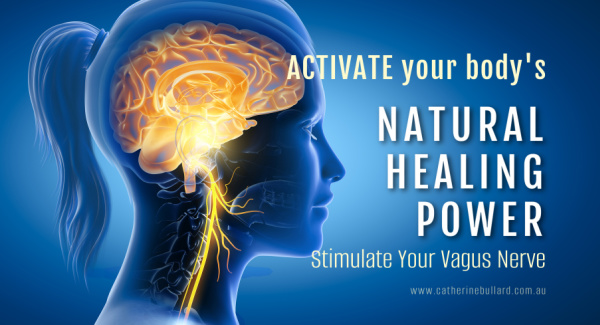
    The Vagus Nerve: Activate Your Body’s Natural Healing Power

    Have you heard of the vagus nerve? It’s one of the most important nerves in your body. When it’s healthy and stimulated it can help reduce stress, improve your mood and boost your immune system. Even if you’ve never heard of it, you need to know about the vagus nerve if you want to improve your health and wellness.

    What is the Vagus Nerve?


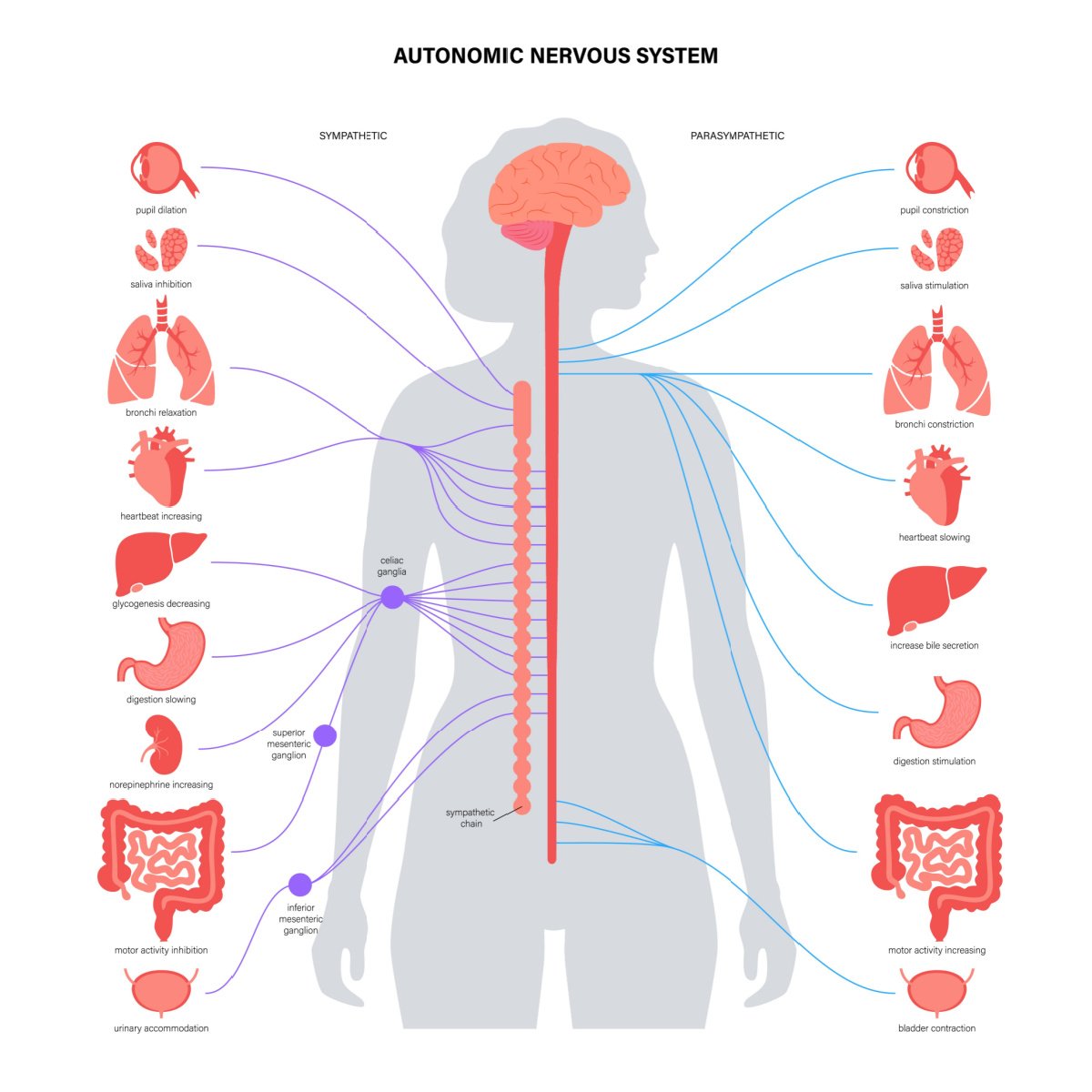
    The vagus nerve is the longest and most complex cranial nerve in your body. It carries signals to and from your brain to many vital organs, including your heart, blood vessels, lungs, stomach, intestines, vocal chords and more. It is part of the autonomic nervous system (ANS), which plays a role in controlling and regulating involuntary functions like breathing, heartbeat, mood, digestion, and blood pressure.

    Autonomic nervous system

    The ANS has two main branches: the sympathetic nervous system (SNS) and the parasympathetic nervous system (PNS).

    The sympathetic branch (SNS) is responsible for activating the “fight or flight” response when you face a threat or a challenge. It stimulates your adrenal glands to release adrenaline and cortisol, which increases your heart rate, blood pressure, blood sugar, and alertness. This helps you immediately cope with the challenging situation, but it also puts a lot of stress on your body.

    The other parasympathetic branch (PNS) is responsible for activating the “rest and digest” response which kicks in to calm your body down and restore balance once the threat or challenge is over. By stimulating the vagus nerve, we get greater calming effects from the PNS.

    The vagus nerve is the main component of the PNS, and it acts as a bridge between your brain and your body. It sends signals from your brain to your organs to regulate their functions. It also sends feedback from your organs to your brain with information about your physical and emotional state. The vagus nerve is like a two-way communication channel that helps you maintain homeostasis, a state of equilibrium and harmony in your body.

    Maintaining balance between the PNS and SNS is crucial for your physical and mental health and wellness.

    How the Vagus Nerve Affects Wellness

    The vagus nerve influences many aspects of your physiology and psychology and has a profound impact on your health and well-being.

    Here are some of the benefits of a healthy and active vagus nerve:

    Reduce Stress and Anxiety

    The vagus nerve plays an important role in regulating the stress response. It lowers your heart rate, blood pressure, breathing rate, and cortisol levels. Cortisol is a hormone released by your adrenal glands in response to stress. When it’s chronically elevated it can have negative effects on your health. The vagus nerve can also help you cope with emotional stress by enhancing your social skills, empathy, compassion, and trust.

    The vagus nerve protects your body by helping it switch back and forth from the fight-flight response and the rest-digest mode.

    Improve Mood and Mental Health

    The vagus nerve stimulates production of neurotransmitters serotonin and oxytocin which are associated with happiness and well-being. Serotonin is a chemical that regulates your mood, appetite, sleep, memory, and learning. Oxytocin is a hormone that promotes bonding, love, and social connection.

    The vagus nerve increases your resilience and optimism to help prevent or treat depression.

    Boost Immune System and Reduce Inflammation

    Inflammation is a natural response to injury or infection, but it can also cause damage to your tissues and organs when it’s chronic or excessive. The vagus nerve can activate the cholinergic anti-inflammatory pathway (CAP), which is a mechanism that suppresses inflammation in your body.

    It helps you fight off infections and diseases by enhancing your immune system’s function and reducing inflammation.

    Enhance Your Cognitive Abilities and Memory

    Brain power improves when a healthy vagus nerve delivers increased blood flow and oxygen to your brain cells to sharpen focus, attention, creativity, problem-solving skills and memory. It can also stimulate neurogenesis, the creation of new neurons, in the hippocampus, which is a part of your brain that is involved in learning and memory.

    A healthy vagus nerve improves brain power

    Support Digestive Health and Metabolism

    The signals sent via the vagus nerve from your brain to your stomach and intestines regulate appetite and digestion. They can also control the secretion of gastric acid, enzymes, hormones, and bile that are essential for breaking down food and absorbing nutrients. This helps prevent and treat digestive disorders like irritable bowel syndrome (IBS), acid reflux, ulcers, constipation, and diarrhea.

    Improve Heart Health and Cardiovascular Function

    Heart rate variability (HRV) is a measure of how much your heart rate changes from beat to beat. A high HRV indicates that you have a flexible and adaptable heart that can respond to changing demands. A low HRV indicates that you have a rigid and stressed heart that is more prone to arrhythmias and cardiovascular diseases. The vagus nerve can help lower your risk of heart attack, stroke, and hypertension by increasing your HRV and improving your cardiovascular function.

    How to Activate Your Vagus Nerve

    As you can see, the vagus nerve is a powerful ally for your health and wellness. But how do you activate it and reap its benefits? The good news is that there are many simple and natural ways to stimulate your vagus nerve and enhance its function.

    Here are some of the most effective methods:

    Deep Breathing

    Breathing deeply and slowly in through your nose and out through your mouth is an excellent way to stimulate your vagus nerve. It activates your PNS and increases your HRV. It can lower your heart rate and blood pressure and calm your nervous system.

    Practice deep breathing by inhaling through your nose for four seconds, holding your breath for four seconds, exhaling through your mouth for four seconds, and pausing for four seconds. Repeat this cycle for a few minutes and notice how you feel.

    Mindfulness and Meditation

    Meditating is a great way to calm your mind and body by reducing stress, anxiety and negative emotions. It helps you focus on the present moment to reduce the negative thoughts and challenging emotions that trigger stress. Combine meditation with deep breathing for greater benefits. Through meditation we increase our awareness of the present moment which can help you regulate both your physiological and psychological responses.

    Practice mindfulness by fine-tuning your awareness to notice whatever is going on around or within you, without judgement.

    Practice meditation by sitting comfortably, closing your eyes, and focusing on your breath, a mantra, a sound, or a sensation. Whenever your mind wanders, gently bring it back to your focus point.

    If you find sitting still to meditate difficult, try an active meditation instead such as a Walking Meditation.

    Humming or Singing Loudly

    Humming or singing can stimulate your vagus nerve by activating your vocal cords and diaphragm. It can also increase your production of nitric oxide, which is a molecule that dilates your blood vessels and improves blood flow to your brain and organs. Hum or sing any tune that you like or try chanting “om” or “ahh”, which are sounds that resonate with your vagus nerve.

    Laughing

    Laughing can trigger your vagus nerve by engaging your facial muscles and diaphragm. It can also release endorphins, which are natural painkillers and mood boosters. Laugh by watching a funny show, reading a humorous book, or sharing jokes with friends.

    Cold Shower

    Exposing yourself to cold water or cold air stimulates your thermoreceptors, the nerve endings that detect changes in temperature. It also increases your metabolism, immune system and antioxidant levels. Take a cold shower by gradually lowering the temperature of the water until it’s comfortable but challenging. You could also try splashing cold water on your face or dipping your feet in ice water.

    Positive Social Relationships

    Positive social relationships stimulate your vagus nerve by enhancing your emotional and social intelligence. They also increase your oxytocin and serotonin levels, which promote bonding, trust and happiness. Cultivate positive social relationships by spending time with people who support you, care for you and make you feel good. Expressing gratitude, appreciation and affection to the people in your life also activates the vagus nerve.

    Tai Chi and Yoga

    Tai chi is a form of martial arts involving slow, graceful movements that coordinate with breathing and mental focus. It stimulates your vagus nerve by improving balance, coordination, flexibility, and circulation. It can also reduce your stress, anxiety and depression. Practice tai chi or yoga by joining a class, watching a video, or following an app.

    Probiotics

    The vagus nerve is the main channel for conveying messages between the gut to the brain, including threatening feelings or ‘gut instincts’.  When your gut is functioning poorly bad gut microbes overgrow and cause inflammation. Probiotics are beneficial bacteria and yeasts that live in your gut and help you digest food and produce vitamins and neurotransmitters. They communicate with your brain via the vagus nerve and influence your mood, thinking, and behavior. Taking probiotic supplements increases the number of good bacteria in your gut.

    Consume probiotics by eating fermented foods like yogurt, kefir, sauerkraut, kimchi, miso, tempeh, or kombucha. Or take probiotic supplements that contain strains of Lactobacillus and Bifidobacterium.

    Intermittent Fasting

    Fasting is the practice of abstaining from food for a certain period of time. It activates your vagus nerve by reducing inflammation, oxidative stress, and insulin resistance. It can also help you recycle damaged cells, and stimulate ketosis which is the state of burning fat instead of glucose for energy. Practice intermittent fasting by skipping breakfast and eating only within an eight-hour window. Alternatively do a 24-hour fast once a week.

    Zinc

    Zinc is a mineral essential for many functions in your body, including immune system, wound healing, DNA synthesis and enzyme activity. It also modulates your vagus nerve by regulating neurotransmitter and hormone levels.

    You can get zinc from certain foods including oysters, beef, pumpkin seeds, lentils, and dark chocolate. You can also take zinc supplements containing 15 to 30 mg of zinc per day. Many Australians are zinc deficient and so need to supplement. Australian soils are particularly low in zinc, which then affects the amount of zinc available from food grown within that soil.

    Massage

    Reflexology is massage of the feet and research shows it increases vagus nerve tone and improves blood pressure. Have a professional reflexology treatment and rub your feet, stretch your toes and rotate your ankles at other times.

    Signs Your Vagus Nerve is Suffering


    Those are just some ways you can activate your vagus nerve and enjoy its benefits for your health and well-being. However, you should also be aware of the signs that indicate that your vagus nerve may be malfunctioning or damaged.

    Some of these signs are:

    • Abdominal pain and bloating
    • Acid reflux or heartburn
    • Elevated heart rate and blood pressure
    • Dizziness or fainting
    • Loss of gag reflex or difficulty swallowing
    • Hoarseness or loss of voice
    • Loss of appetite or nausea and vomiting
    • Tight or sore muscles
    • Racing thoughts or anxiety


    If you experience any of these symptoms, you should consult your doctor and get a proper diagnosis and treatment.


    I hope you learned something new and useful from this blog post. Remember, your vagus nerve is a powerful connection between your brain and your body which can influence your health and well-being in many ways. By stimulating your vagus nerve, you can change your body chemistry and improve your mindset.

    So, try some of the methods I’ve mentioned and see how they work for you. And don’t forget to share your feedback and questions in the comments section below. Thanks for reading and have a great day!

    DISCLAIMER

    All information and opinions presented here are for information purposes only and are not intended as a substitute for professional advice. Do not use this article to diagnose a health condition. Speak to your doctor if you think your condition may be serious or before discontinuing any prescribed medication. Please consult with your health care provider before following any of the treatment suggested anywhere on this site, particularly if you have an ongoing health issue.

    © Catherine Bullard and Happy Holistic Health, 2024. Unauthorised use and/or duplication of this material without express and written permission from this blog’s author and/or owner is strictly prohibited. Excerpts and links may be used, provided that full and clear credit is given to Catherine Bullard and Happy Holistic Health with appropriate and specific direction to the original content.

    Create Your Wellness Blueprint For Great Health

    It’s often during their fifties or sixties that many first receive shocking news about their health. It may be they have pre-diabetes or high blood pressure. They may be diagnosed with thyroid disease or another autoimmune condition.  Menopause may be tiresome and seem tireless. Or they even have serious life-threatening disease like stroke, heart disease or cancer. This is the age when it’s crucial to take control and create your own Wellness Plan to keep you healthy in your fifties and beyond.

    Create your wellness blueprint


    Your Wellness Plan


    But creating a Wellness Plan that fits with YOUR life can be difficult. Where to begin?  What do you do when the advice on “Dr Google” seems to be contradictory?  You can’t change everything at once so how do you know which changes are the most important?  And what about natural remedies?  There are sure to be some that will help your situation.

    And then there’s the issue of different advice coming from different people. What happens when your doctors and therapists are all focused on a different part of you so they all tell you to do something different?  For example, you may be told you need to walk every day for your health. But what if your arthritis or foot problems make this really difficult. What if you’re recommended a diet based on foods you know don’t sit well with you?

    The situation can become confusing and may result in you making only minimal changes at best. For many it’s just too overwhelming and they give up before they even begin.

    And of course there’s the whole challenge of how you begin when you need to make dramatic changes.  W hat is the very first step?


    Information Overload 


    I have seen this situation occur in many of my clients who are left confused, frustrated and scared.  They want to make changes to their lifestyle to become healthier and reduce the likelihood of further problems.

    But too often they end up drowning in an overload of information. They lose sight of the big picture and sink below the details. They need the key to managing the situation. Only then they can go ahead and continue to enjoy their life.

    That key is to create the Big Plan which I call the WELLNESS BLUEPRINT.

    When dramatic change seems overwhelmingly huge it can help to break down the changes needed into small steps. If you have been told to cut out coffee or alcohol for example, cutting back gradually can make it easier. It help breaks the habit so you achieve your goal over a few weeks.

    Of course in the case of certain serious illnesses you need to do much more than just give up coffee. And you usually need to make the changes immediately.  But by making small changes across your whole life you begin the process. Change happens in small increments in many different ways at the same time. Later changes are much easier to make because you’re already part of the way towards successfully achieving them.

    There’s no doubt that in order to stay healthy, feel young and continue to enjoy life we must change our lifestyle behaviours and ditch bad habits. But the way you go about it will dictate whether it is easy or difficult. More importantly, it also impacts how successful you are at making long-term sustainable change.

    After all, if you just slip back into your old habits nothing is gained. Whether it happens immediately or not for a year or so, you’ll again find yourself back in a health crisis.

    The message in a health wake-up call is to make changes that are sustainable.

    Continue reading to discover how to  create long-term sustainable wellness…


    Disclaimer


    All information and opinions presented here are for information purposes only and are not intended as a substitute for professional advice offered during a consultation with your health care provider. Do not use this article to diagnose a health condition. Speak to your doctor if you think your condition may be serious or before discontinuing any prescribed medication. Please consult with your health care provider before following any of the treatment suggested on this site, particularly if you have an ongoing health issue.


    Sick Or Healthy: It’s In Your Thoughts

    Watch your thoughts, they affect your health

    Your thoughts can have a huge impact on your health. The human mind is the most powerful supercomputer in the world. It controls all the functions of your body, your behaviour, and your emotions. But your mind doesn’t necessarily control you, and recent research shows that you have the power to control your mind. The secret lies in the way you think because thoughts affect health. It turns out the power of positive thought may be stronger than we thought, and it can be harnessed to create health and wellbeing. The way you think can either make you sick or it can make you healthy. 

    IMPACT OF THOUGHTS

    How we think determines how we speak and what we talk about which then impacts how we feel. Every decision, choice and action we make is influenced by how we feel.

    Studies have shown that mindsets can change us in ways we had not imagined possible. So science is now asking if mindsets can change us, can we then deliberately choose our mindsets to improve our abilities. And the answer appears to be yes.

    The cells in your body react to your thinking. Your thoughts can literally change your health by altering the cells and how they function. Every thought you have causes neurochemical changes within your brain and these can either help or harm you.

    THOUGHTS AFFECT HEALTH

    Your thoughts can alter your performance. They can alter your engagement and enjoyment of life. They can even alter your energetic body.

    This really is a case of mind over matter.

    Studies have produced much evidence that the way we think can create or change real-life physical and mental outcomes.

    It’s been shown that our expectations can change brain chemistry and circuitry. This results in cognitive and physiological changes such as reduced anxiety, elevated hormone levels, or lower immune system reactions. Thoughts alone can improve our vision, weight loss, fitness, fatigue level, and can even stop allergic skin reactions.

    Essentially your brain is shaped by your thoughts. And apparently your health and wellbeing is too.

    THE PLACEBO EFFECT

    Dr Lissa Rankin MD conducted extensive research and became completely convinced that a combination of positive belief and nurturing care activates the body’s natural self-repair mechanisms and helps the body heal itself. “The medical establishment has been proving that the mins can heal the body for over 50 years. We call it ‘the placebo effect‘”, she says.

    But as she explains in her book Mind Over Medicine: Scientific Proof That You Can Heal Yourself the opposite is also true. Negative beliefs you hold about your health and harsh insensitive treatment by the health care system can poison your body.

    Like this article? Continue reading…

    Save

    Best Tips For Spring Health And Wellness

    BEST TIPS FOR SPRING HEALTH AND WELLNESS


    After a long cold, wet, winter we’re all quite ready to bid it farewell! Spring has blossomed bringing the reminder of youth, and the promise of new beginnings. We’re ready to shrug off winter, stretch and expand our energy up and outwards. Spring is the time of transformation and growth. Spring’s the time to renew your energy and change your life. These top tips for Spring health will launch your momentum to rise to your fullest Summer potential.

    As the days warm and lengthen in Spring you’ll start to feel lighter, both emotionally and physically.


    best tips for spring health and wellness


    AWAKEN

    Get outside. Play, socialize and have fun just as a child would. The sun is up earlier and staying later. Join him and get outside to watch the dawn. Even if you wake grumpy give yourself the opportunity to get out, feel the earth under your feet and soak in all the benefits of grounding.


    MOVE

    Instead of letting restlessness irritate you in spring use it to kick-start your exercise program.

    Spring is a great time to overhaul – or begin – your exercise routine. Walk faster, join a dance class, try yoga or tai chi, even join a hiking group or cricket team. Honour your body by not overdoing it, and remember to keep hydrated or you’ll become fatigued very quickly.


    RELEASE

    If you want to bring the new into your life you must make space for it. Whether it’s a new spring wardrobe, new habits or new thought patterns, if you want it to create a new you, you need to de-clutter first. The first step is to release everything that no longer serves you.

    Spring offers a great opportunity to clear the mind and get rid of thoughts that undermine our self-esteem or are toxic to relationships. Once you clear out old toxic thought patterns you can start planting positivity seeds to create a life you love.

    LIKE THIS POST?  Continue…

    Save

    Health Benefits Of Lemons

    There are so many new and exotic superfoods around and it seems their numbers just keep growing. With all the hype surrounding the new it’s very easy to forget the simple traditional superfoods that have stood the test of time. These are the superfoods we’ve been using every day for generations without even thinking of the incredible health benefits they bestow. They are readily available and much less costly. One of the most valuable of the traditional superfoods is the humble lemon, peel and all, which certainly packs a powerful punch when it comes to turbo-charging your health.

    health benefits of lemons

    Lemons really are a wonder food loaded with nutrients. Well-known as an excellent source of vitamin C, they also contain a wide range of other nutrients including flavonoids, vitamin B-complex, calcium, magnesium, potassium, iron, copper and phosphorous, citric acid and fibre. You can’t help but love all the lemons health benefits.


    LEMONS – ACIDIC OR ALKALINE?

    Many people get confused about whether lemons are acidic or alkaline. They wonder how lemons can be an “alkaline food” when they’re so acidic to taste. In fact they’re both.

    Outside the body lemon juice is acidic. But once the lemon juice has been fully metabolized within the body and its minerals have been dissociated into the bloodstream its effect is alkalizing..

    This means it raises the pH of body tissues making them alkaline. In acidic environments the structure and function of the cell are damaged. Lemons help to return the body to a healthier alkaline state to fight off the wide range of dangerous and unpleasant illnesses including cancer associated with acidic body fluids.

    Lemons are one of the most alkalizing foods around.


    WARM LEMON WATER, THE NUMBER 1 HEALTH PRACTICE

    I always recommend if someone can only do ONE thing to improve their health then it should be to drink the juice of half a lemon in a glass of warm water in the morning. The trick is to do it when they first rise in the morning, half an hour before they eat or drink anything else. The combination of lemon and warm water encourages the production of bile to support the liver, to prevent liver disease and help eliminate toxins. it stimulates gastric juices and acts well to cleanse the bowel.

    Even just adding a few drops of lemon juice to water or food can aid digestion and cleanse the system.

    Simply, here are some ways warm lemon water can boost your health:

    Like this article?  Read more….

    8 Methods of Grounding and Connecting to the Earth’s Frequencies

    Grounding is one of the most simple and fundamental ways to rebalance your energies. Walking barefoot on the earth immediately makes you feel whole again, but it isn’t the only way to ground yourself and bring you back to centre.  Here are eight ways to ground yourself with thanks to Adam Lanka of healthy holistic living

    simple ways to ground yourself

    The term grounding means connected to the Earth, and it is one that spans numerous different cultures, traditions, and spiritual practices. While it is associated with feelings of balance, connection, centeredness, sinking, being anchored and in the flow, I would like to explore the greater implications of what is happening every time you go outside and relax into nature.

    All species upon our planet are shaped by the forces and presence of the Earth and the cosmos, and as such this connection is deeply inherent to a sustainable state of well-being. The Earth, as an organic and inorganic system, is constantly bathing all life on the planet with its highly ordered and coherent electromagnetic field. The natural tendency of an organism is to couple with the Earth’s energy field, and come into a state of mutual cooperation and harmony with its external environment, finding its niche and its place within a system.

    What we need to understand is that all systems strive to achieve, return to, or maintain a state of pure coherence. In every single moment, whether one is aware of it or not, we are taking part in a constant process within our universe, coupling with other energy fields and finding some sort of balance within this space. This happens everywhere, with life within an ecosystem, when you sit down in your favorite chair and watch television, when you play with animals, or when you say hello to your neighbor. We are constantly interacting with the energy fields all around us in varying degrees and to varying results.

    The more organized or coherent these fields are, the more effectively and efficiently energy can be transferred to both stimulate and enhance the lesser organized of the two. Of utmost important to all life on our planet, the Earth’s field has a normal lower range of ~7.8 Hz, also known as the Schumann Resonance.

    This natural rhythm is found in multiple places within the human organism, and it is inherent to functioning at our most efficient, sustainable, and coherent state. The human body cavity resonates at 7.8 Hz. Our Alpha and Theta brain waves both border the frequency of 7.8 Hz. These brain waves are associated with insight, intuition, inspiration, meditation, relaxation, and calmness.

    Thus, the Earth resonates with our biological system, bringing us into a state of greater coherence. This enhances our mental, emotional, and physical wellbeing. When grounded, organisms operate more efficiently and harmoniously and can more freely access the Earth’s stabilizing electromagnetic energy to increase vitality, health, wellness and enjoy a prolonged lifespan.

    This is ancient knowledge that is expressed in widely different cultures, traditions, and spiritual practices, and it all draws from our connection to the Earth. It is then important to become aware that the dominant Western paradigm in the world at the moment is largely set up to alienate people and hinder this connection to the Earth.

    The economic system is set up to keep people inside generating information, in large buildings of stone and metal that disconnect us from the Earth. We surround ourselves with machines and technology that constantly bombard us with electromagnetic radiation, i.e. telephones, computers, televisions, etc. We are sold pieces of insulating plastic or rubber to put onto our feet when we are out in nature, hindering the flow of energy from the Earth up into our physical vessel. Pollution and invasive procedures within the Earth distort the electromagnetic field.

    Thankfully, we can cultivate our connection to the Earth and facilitate a more coherent, healthy state of being through the practice of grounding. Below are detailed many different methods that one can utilize to bring the human organism back into harmony with the Earth’s energetic field:


    Simple Ways Of Grounding Yourself


    simple ways to ground yourself

    1. Go Outside

    Be out in nature; go to a field, a mountain, a swamp, a river, a stream, a beach, the ocean. Get out of the office, off of the couch. Be in the presence of nature, be in the presence of life.

    2. Walk in Nature Barefoot

    Enjoy some quality barefoot time. The human species has thrived for thousands of years barefoot, let’s take the time to return to this practice in our daily life.

    3. Hug a Tree

    It’s science; go couple and touch another organism to balance your energy field.

    4. Use Grounding Technology

    Many people and companies have developed technology to ground you and replenish your body with negative ions. The Earth is the largest electron donor and receiver, and the ideal PH of the human body is alkaline to neutral. Germs, bacteria, parasites, viruses have a positive charge and thrive in an acidic environment.

    Using grounding electrodes helps increase the electro-negativity of the human organism, making the internal environment more alkaline, which is widely recognized as critical to a healthy immune system.

    Innovative products for grounding the body in unnatural environments like the Earthing mat, or the Earthing sheet from Earthing.com are practical ways to maintain harmonizing electro-magnetic contact with the earth.

    5. Utilize Visualization

    As conscious beings, we can alter and regulate our energy field through our changing emotions, and how we choose to feel. Visualization is an ancient practice that is incredibly effective and can be done in any moment, no matter where you are. Below are a few techniques that are quite effective.

    spiritual grounding

    6. Grounding Chord

    Visualize, see, feel, or simply be aware of the center of the Earth and the free energy that it emits. With your mind and heart, reach down into the core, and pull up a pulsing, twisting chord of energy from the depths of the Earth. Hook this chord onto your root chakra, or sacral chakra as well for women, and feel the immediate connection between you and the Earth as the energy flows through you. You may become aware of a sinking feeling, a tightening and flexing of the perineum and muscles in your groin and butt area. Conversely, you can also flex these muscles and concentrate on sending the chord down into the Earth, as well.

    Practice and repeat this process as often as you need. Experiment with different chords of different colors and thicknesses, and experience the incredibly wide variety of sensations that it will instil in you.

    7. Tree Meditation

    Visualize, see, feel or simply be aware of your body, and become a tree. Feel your feet grow roots that sink down into the Earth and anchor you to it. Feel your legs and thighs become wood as well, as the roots that grow up from the ground encircle and entwine themselves around your legs, and continue to spread up your body. Feel the straightening in your spine as you become a trunk, feel the energy rising from the Earth up into your stomach, into your heart, into your head. Feel your arms become branches that grow, stretch, and reach for the sky, drinking in the light of the sun and changing it into energy. Feel your crown open as it fills with light, which then flows down into your roots and into the Earth.

    8. Mountain Meditation

    Visualize, see, feel, or simply be aware of your body becoming a mountain, turning into stone. We see only the tips of mountains, their roots run deep into the Earth. Feel your legs and lower body anchoring into the bedrock and stone of the Earth, and the feelings of peace and calmness that come with it. Become the base of the mountain as it grows upwards and reaches into the sky. Feel your crown as the top of the mountain, where the Earth and sky meet and mingle; the connection of these two opposite spectrums that are in perpetual balance.

    techniques for grounding yourself

    We have the ability to regulate and change our state of being. While indeed we are a product of our environments, constantly in the presence of other external forces and influences, we always have a choice as to how we choose to feel and how we respond. We have the choice to change our external and internal environment to come into a state of greater harmony and coherence. I invite you to utilize the information and techniques above to increase your coherence, elevate your vibration, and take your power back to be the change in the universe you wish to see.

    Disclaimer

    All information and opinions presented here are for information purposes only and are not intended as a substitute for professional advice offered during a consultation. Please consult with your health care provider before following any of the treatment suggested on this site, particularly if you have an ongoing health issue

    Adam Lanka

    Adam Lanka, originally from North Carolina, is a traveling philosopher, energetic arts healer, and physicist. His passion and interest are in bridging the gaps in the dominant paradigm, uniting science and spirituality into one journey of consciousness, and elevating the vibration of humanity. To learn more about Adam, please visit his personal blog, The Wanderlust. Find him on Facebook at Gateway Explorations.


    Happy New Year -Shine On

    happy new year 2016


    Dear Amazing Reader,

    Thank you for stopping by and supporting my blog last year.

    I hope while you were here you discovered much to inspire you, as well as loads of everyday tips to help you live a healthy, happy life.

    May your New Year be filled with inspiration, love, laughter, and many magical moments with friends and family.

    Let’s step forward into the New Year together on the road towards great health and heappiness.

    catherine bullard blog


    Go Nuts For Almond Milk

    There are many reasons why someone may turn to almond milk. Increasingly it’s seen as a tasty substitute for cow’s milk for those with dairy intolerance or allergy. But even without having dairy intolerance many people now wish to lighten the load placed on their digestive system when they eat animal foods including dairy products , and so turn to cow’s milk alternatives. Many others drink almond milk simply for its delicious taste, at the same time reaping the health benefits offered by this vibrant nut.

    go nuts for almond milk

    Nuts are little powerhouses of healthy goodness. Quick, easy and delicious they are power-packed with wonderful health benefits. While each type of nut differs in it’s composition and thus its particular health benefits, all have much goodness to offer and almonds are no exception.


    Health Benefits Of Almonds

    All nuts contain protein, and fibre but are low in carbohydrates. They also contain healthy fats. Many studies have found that in spite of the high fat content nut consumption is linked to a lower risk for heart disease.

    Almonds are high in monounsaturated fats, which is also the fat found in olive oil. However, almonds come in with a better ratio of protein to fat than other nuts. Many hold almonds in very high esteem and regard them as ‘nut royalty’.


    Almonds For Heart Health

    Monounsaturated fats are great for your heart health, helping to reduce cholesterol levels by reducing LDL, the ‘bad’ cholesterol. Some studies have shown that high levels of LDL cholesterol in patients were reduced with a diet containing almonds and other nuts.

    The Nurses Health Study showed that a 30% reduction in heart disease risk could be gained by replacing carbohydrates with an equivalent amount of nuts. A 45% decrease in risk could be gained by substituting the monounsaturated fat in nuts for saturated fats in meat and dairy products.


    Antioxidant Rich Almonds

    Almonds are loaded with antioxidants which prevent oxidative stress caused by free radicals. Oxidative stress damages cells and contributes to many serious illnesses including cancer.

    Most of the antioxidants in almonds are found in the brown skin and eating nuts with the skin still on delivers double the antioxidants and double the protection for your cells.

    One of these cell-protecting antioxidants is vitamin E. In fact almonds are the best source of Vitamin E of any food. This antioxidant is particularly good for skin protection helping to improve its conditon and appearance and protect against the effects of aging.


    Almonds Contain Magnesium

    Many people are deficient in the fundamental mineral magnesium and this causes widespread health problems as magnesium is required for many, many body processes. Almonds are a great source of this vital mineral and just 60 grams of almonds, one small handful, provides almost half the recommended daily magnesium intake.

    Studies show that improving magnesium deficiency can reduce hypertension and LDL cholesterol levels. Including almonds in your diet supports the health of your  cardiovascular system.

    It’s common for diabetics to have magnesium deficiency. High magnesium foods like almonds may be helpful in preventing blood sugar disorders such as insulin resistance, type 2 diabets and metabolic syndrome.


    Omega 6 In Almonds

    Many people consume far too much omega-6 every day and not enough omega-3. The western diet provides a really unbalanced omega-6 to omega-3 ratio. It should be about 4:1 but in many cases it’s more like 10:1 or even 30:1 skewed to omega-6.

    Unlike walnuts which contain good amounts of omega-3 almonds are high in omega-6.

    Eating lots of almonds could become a huge problem if you’re not regulating how much omega-6 you get from other foods, notably vegetable oils containing polyunsaturated fats.

    But almonds contain monosaturated fats which are a far healthier option than the polyunsaturated fats of vegetable oils. Sourcing the omega-6 essential fatty acids you require from almonds rather than less healthy foods is a smarter decision. Almonds are a great health food as they also contain a range of other wonderful nutrients.

    Embrace almonds as part of a healthy eating plan. Consider your diet as a whole and replace unhealthier components with nutrient-rich almonds.

    Just 30g or a small handful, of almonds contains:almond nutrients


    DIY ALMOND MILK

    Home made almond milk is a wonderful substitute for dairy milk. It’s nutritious, being high almond health benefitsin protein and of course healthy fats. It also contains fibre, Vitamin E, the minerals phosphorous,  magnesium, copper, selenium and calcium, the amino acid tryptophan, as well as flavonoids.

    In addition it has no cholesterol.

    It has a slightly nutty taste and a creamy texture and the flavour is lighter than soy or rice milk.

    Of course almonds are a tree nut so almond milk isn’t for anyone with nut allergies.

    Almond milk is widely available through supermarkets as well as health food shops, but is pricey and unfortunately some brands are sweetened.

    A number of brands have a very low percentage of almonds in them, which greatly reduces their nutrient value. By making your own nut milk you can increase the nut content and so the nutrients, dramatically.

    Almond milk is good cold, in tea or coffee, smoothies and can also be used for cooking items like cakes or soups. I use it, but in small quantities and so often end up throwing quite a lot out from the bought boxes, which means making my own is a great option.


    Easy Almond Milk Recipe

    Almond milk is really easy to make and the best thing is you can make it in just the quantity that you need, so no problem with it spoiling.

    It’s simple to adjust the recipe to suit your own personal preferences. For instance, you can flavour the milk with spices to suit your taste, a great option if you’re creating a dish where you want a specific flavour.

    Plus, you’ll have the leftover pulp to use in cooking, so you get the health benefit of every part of the almond.

    Here’s how you make it:

    • Soak 1 cup of fresh, raw almonds in filtered water overnight. Make sure there’s extra water to allow room for swelling.
    • Remove the almonds from the water.
    • For a less gritty texture, remove the skins. If you want a richer flavour toast the skins lightly.
    • Place the cup of almonds in a blender with 2 cups of filtered water and blend on high speed until creamy.
    • Add flavouring like cinnamon, honey, cardamom, saffron or a pinch of sea salt and then blend again, if you like.
    • Strain the mixture through cheesecloth or a fine strainer to separate the pulp.
    • You can drink it immediately or for a creamier version, leave it covered in the fridge overnight. It keeps in the fridge for up to a week.
    • The remaining pulp can then be roasted dry and stored in a jar to use as almond flour.
    • Or you could place the almond skins and the pulp in cheesecloth to use as an invigorating body scrub.

    almonds

    Disclaimer.

    All information and opinions presented here are for information only and are not intended as a substitute for professional advice offered during a consultation. Please consult with your health care provider before trying any of the treatment suggested on this site.